

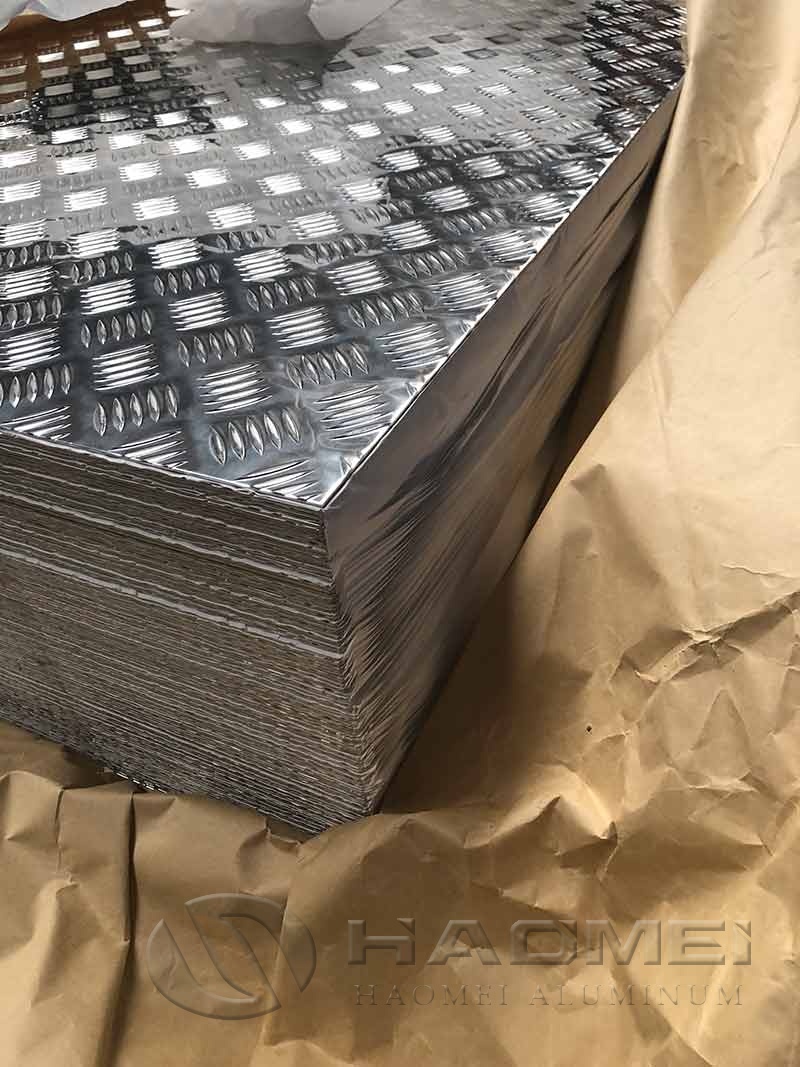
5 Bar Aluminium Checker Plate
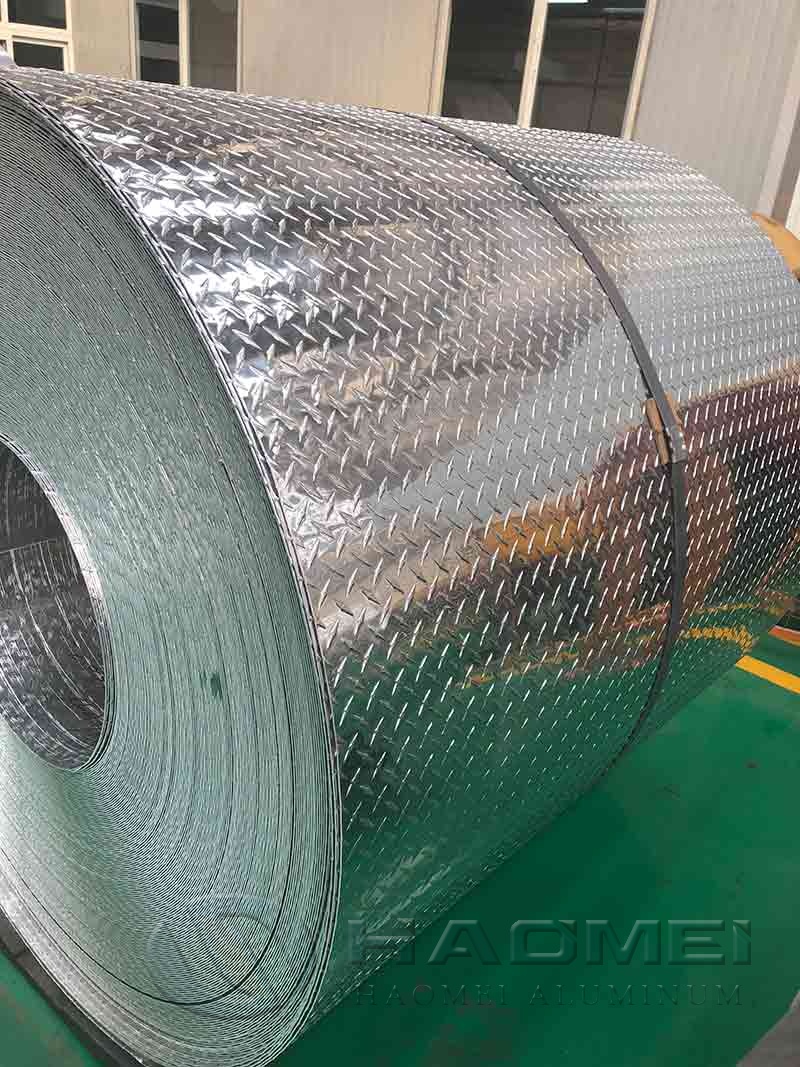
5 Bar Aluminium Checker Plate is widely specified for walkways, vehicle floors, ramps, steps, toolboxes, wall protection, and access covers. The raised five-bar pattern improves traction and gives a practical industrial appearance, but the pattern alone does not determine whether a plate is suitable for a demanding installation. Alloy, temper, thickness, panel support, surface condition, and environment all matter.
The five questions below reflect high-intent English questions frequently raised in recent search and social Q&A discussions. They focus on the decisions that affect safety, service life, fabrication cost, and finished appearance.
| Purchase factor | Why it matters | What to confirm before production |
|---|---|---|
| Alloy and temper | Controls corrosion resistance and forming behavior | 1050, 1060, 3003, 3105, 5052, or 5754 grade; H114 or H32 temper |
| Base thickness | Determines structural performance | Thickness excluding the raised bars, not only total height |
| Pattern direction | Affects drainage, grip, and visual alignment | Bar orientation relative to walking or loading direction |
| Surface finish | Changes appearance and cleaning needs | Mill finish, bright finish, PVC protection, or painted surface |
| Cutting tolerance | Prevents installation gaps | Final dimensions, squareness, edge deburring, and hole locations |
1. What alloy is best for 5 Bar Aluminium Checker Plate?
For indoor flooring, wall guards, and general fabrication, 1050 or 1060 aluminium can be economical choices. These grades have good corrosion resistance and are easy to bend, although they are relatively soft. They are most suitable where the plate is supported closely and heavy point loading is not expected.
For stronger everyday applications, 3003 and 3105 are often selected. Their manganese content provides better strength than pure aluminium grades while retaining good formability. They are common choices for trailer interiors, stair treads, equipment covers, and commercial vehicle linings.
Where moisture, salt, cleaning chemicals, or outdoor exposure are significant, 5052 and 5754 are usually safer specifications. These magnesium-containing alloys offer stronger corrosion resistance and improved mechanical performance. A dock platform, marine access step, utility vehicle floor, or coastal installation may justify the higher material cost because it reduces the risk of premature staining and corrosion damage.
When comparing options, ask whether the stated alloy refers to the patterned face material rather than a generic decorative product. A supplier of Aluminum Alloy Sheet can help match the alloy to bending, welding, and environmental requirements.
2. Does 5 bar checker plate actually prevent slipping?
A five-bar pattern improves grip because the embossed ribs interrupt a smooth walking surface. However, it should not be treated as a guaranteed anti-slip solution in every condition. Oil, ice, mud, soap residue, and standing water can still create hazards, especially where people wear smooth-soled footwear.
Traction depends on several practical details:
- The raised bars must remain clean and undamaged.
- The bar direction should support the expected direction of travel.
- Drainage should prevent water from pooling between raised features.
- A steeper ramp requires a more carefully designed traction system.
- Safety-critical areas may need abrasive inserts, rubber mats, or certified anti-slip treatments.
For a horizontal service platform, standard five-bar aluminium plate is often appropriate. For a loading ramp or wet processing area, evaluate the actual slope, contamination risk, footwear, and cleaning routine. Installing a visually textured surface without considering these conditions can produce a floor that looks safe but performs inconsistently.
3. What thickness should I choose for a trailer floor or walkway?
The correct thickness cannot be selected from vehicle type or application name alone. It depends mainly on unsupported span, load concentration, support spacing, and how the plate is fastened. A 3 mm plate may work well over closely spaced steel cross-members, while a much thicker plate can still flex if it bridges a wide gap.
Use the base-metal thickness for structural comparison. The raised five-bar pattern adds surface height and local stiffness, but it should not be counted as full structural thickness. Ask the supplier to state both base thickness and overall thickness clearly.
| Typical application | Common starting range | Important design check |
|---|---|---|
| Decorative wall protection | 1.0 mm to 2.0 mm | Dent resistance and fastening method |
| Light-duty steps and covers | 2.0 mm to 3.0 mm | Edge support and foot traffic frequency |
| Walkways and service platforms | 3.0 mm to 5.0 mm | Span between support members |
| Trailer or vehicle flooring | 3.0 mm to 6.0 mm | Wheel loads, cross-member spacing, and fastening |
| Heavy-duty industrial decks | 5.0 mm and above | Engineering load calculation and deflection limit |
For a practical quotation, provide the clear span, maximum load, support layout, and whether loads are distributed or concentrated. This information is more useful than simply requesting "heavy-duty" plate.
4. Will 5 Bar Aluminium Checker Plate corrode outdoors or near the sea?
Aluminium naturally forms a protective oxide layer, so it performs well in many outdoor environments. Yet corrosion resistance is not identical across alloys, and surface contamination can affect long-term appearance. In coastal areas, salt deposits remain active when they are trapped under dirt, rubber pads, wet timber, or poorly sealed overlaps.
For marine or near-shore conditions, 5052 or 5754 checker plate is generally preferred over softer general-purpose grades. Regular fresh-water rinsing is valuable where sea spray reaches the surface. Avoid joining aluminium directly to untreated carbon steel, copper, or other dissimilar metals when moisture is present, because galvanic corrosion can occur. Use isolation tape, compatible coatings, non-conductive washers, or appropriate sealants at joints.
Projects involving boat decks, dock access, coastal machinery, or wet transport equipment can benefit from reviewing Marine Grade Aluminum Sheets For Sale alongside the required checker pattern and thickness.
5. Can I cut, bend, weld, and paint 5 bar aluminium plate?
Yes, but fabrication quality depends on the alloy, temper, and method used. Circular saws with carbide-tipped blades, CNC routers, guillotines, laser cutting, waterjet cutting, and plasma cutting can all be used when the correct settings are applied. Burr removal is important because checker plate edges are often handled frequently during installation.
Bending should be planned with the raised bars facing the appropriate side of the bend. Tight bends may flatten or mark the pattern, particularly on thicker material or harder tempers. If appearance matters, make a sample bend using the actual alloy and thickness before committing to a production run.
5052 and 5754 can be welded successfully using suitable filler wire and clean preparation. Welding changes the local temper, so the heat-affected area may become softer than the surrounding plate. For painted finishes, remove oils, oxide residue, and fabrication debris first. A conversion coating or suitable primer improves paint adhesion, particularly for exterior service.
When requesting fabricated panels, specify the pattern orientation, edge treatment, protective film requirement, hole positions, bend lines, and acceptable cosmetic marks. These details help ensure the finished 5 Bar Aluminium Checker Plate fits correctly and presents a consistent surface after installation.
Original source: https://www.hm-alu.com/a/5-bar-aluminium-checker-plate.html
Tags:5 Bar Aluminium Checker Plate aluminium tread plate checker plate flooring aluminium alloy plate
Prev: Complete Alloy Guide for Aluminium Slugs: 1050,1060,1070,3003,3105
Next: Aluminum Round Circle