




Aluminum Discs For Sale
Holiday demand can expose a costly weakness in cookware and utensil production: a press line may have enough coils on paper but not enough correctly sized, protected aluminum blanks to maintain output.
For manufacturers preparing Christmas promotions, year-end retail replenishment, or Lunar New Year production, aluminum discs for sale should be assessed as a continuity solution, not only a material purchase. The priority in this article is delivery reliability: receiving discs with the agreed temper, dimensions, packaging, and documents before holiday-related capacity constraints affect production.
In 2026, Christmas falls on December 25. Lunar New Year in 2027 begins on February 6. Closure periods, port operations, and trucking capacity vary by country, so confirm the production and dispatch calendar with each supplier rather than assuming standard lead times.
Build a Holiday-Ready Disc Specification
A disc that arrives late, scratches during transport, or fails during deep drawing can interrupt an otherwise successful seasonal program. Start with a written release specification that lets the supplier quote accurately and lets receiving teams inspect consistently.
| Requirement | What to State on the Purchase Document | Why It Protects Holiday Output |
|---|---|---|
| Alloy | Alloy designation and governing standard, such as EN 573-3 chemistry requirements where applicable | Prevents unapproved substitutions that may change forming behavior |
| Temper | Required temper, plus any hardness or mechanical-property requirement | Helps control drawability and shape consistency |
| Diameter and thickness | Nominal size, tolerances, burr limits, and flatness requirement | Reduces press setup changes and reject risk |
| Surface | Mill finish, protective interleaving, oil requirement, scratch acceptance criteria | Protects appearance-sensitive cookware and utensils |
| Edge condition | Deburred, slitted, or stamped edge expectation | Limits handling hazards and downstream finishing work |
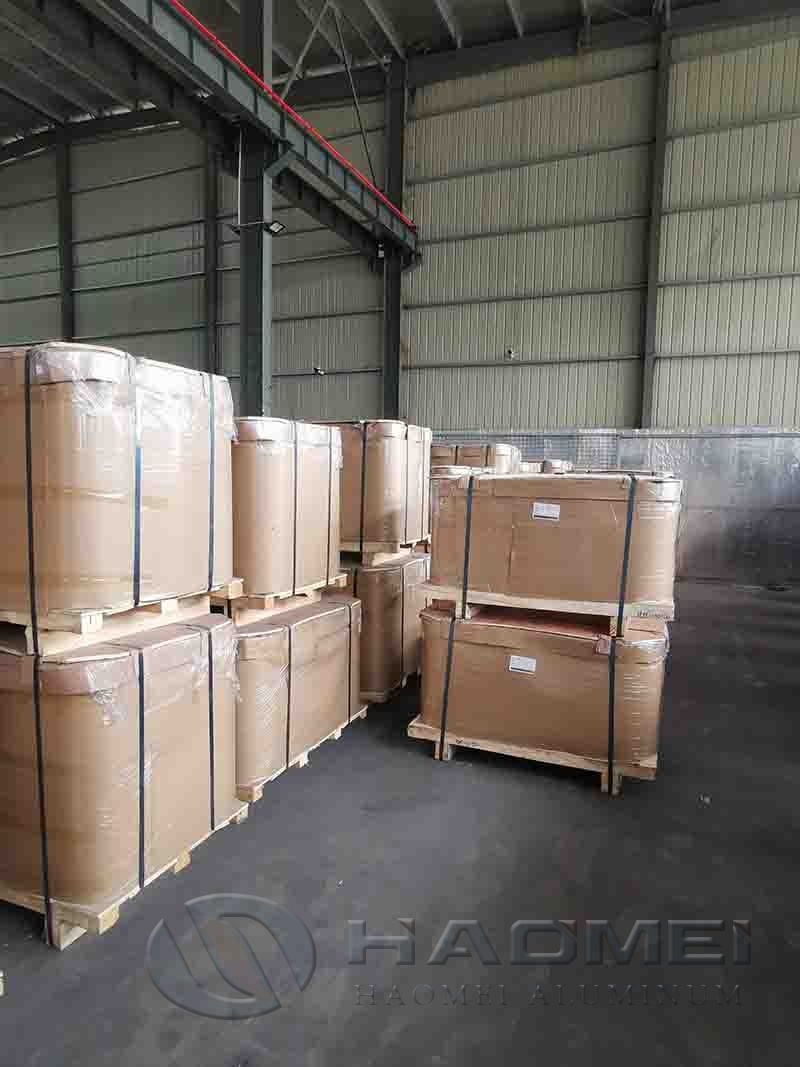
| Packing | Pallet dimensions, stack height, moisture protection, and label format | Supports safe warehouse handling and traceability |
| Documentation | Mill test certificate, packing list, country of origin, and inspection records | Speeds receiving checks and customs documentation |
Use a sample-based first article approval when a new diameter, temper, or drawing depth is planned. A production disc is not automatically suitable for every formed part. Deep-drawn cookware, shallow stamped lids, lighting reflectors, and utensil components can need different combinations of alloy, temper, thickness, lubrication, and surface quality.
For contracts referencing material standards, confirm that the selected standard actually covers the supplied product form. ASTM B209 addresses aluminum and aluminum-alloy sheet and plate. EN 485 covers mechanical properties and tolerances for sheet, strip, and plate. A disc cut from coil should still have a clear agreement on how the relevant coil or sheet standard, test method, and disc tolerances apply.
For estimated logistics planning, disc mass can be calculated as:
Mass (kg) = π ÷ 4 × diameter² × thickness × density
Use meters for diameter and thickness, and use approximately 2,700 kg/m³ as an engineering density estimate for aluminum. Confirm actual packed weight on the commercial packing list because alloy, packaging, and pallet materials affect freight charges.
Match the Disc to the Forming Risk
The lowest unit price is not always the lowest holiday cost. A marginal blank can increase press downtime, cracking, orange peel, surface defects, or rework when schedule recovery options are limited.
Use this comparison during technical review:
| Production Situation | Disc Characteristics to Review | Acceptance Check Before Release |
|---|---|---|
| Deep-drawn cookware body | Formability, temper consistency, surface cleanliness, thickness control | Trial draw using production tooling and lubricant |
| Shallow pan or lid | Flatness, diameter tolerance, edge condition | Press fit and trim verification |
| Polished utensil component | Surface marks, inclusions, protective paper or film | Visual inspection under defined lighting |
| Anodized decorative part | Alloy consistency and surface uniformity | Anodizing sample against approved appearance standard |
| Food-contact finished product | Finished coating, cleaning process, and applicable market rules | Regulatory review for the destination market |
Do not describe bare aluminum disc stock as food-contact compliant without reviewing the complete finished article and the destination market's requirements. In the United States, food-contact substances are regulated by the U.S. Food and Drug Administration under the Federal Food, Drug, and Cosmetic Act and related regulations. Coatings, inks, cleaners, and manufacturing residues may matter as much as the substrate.
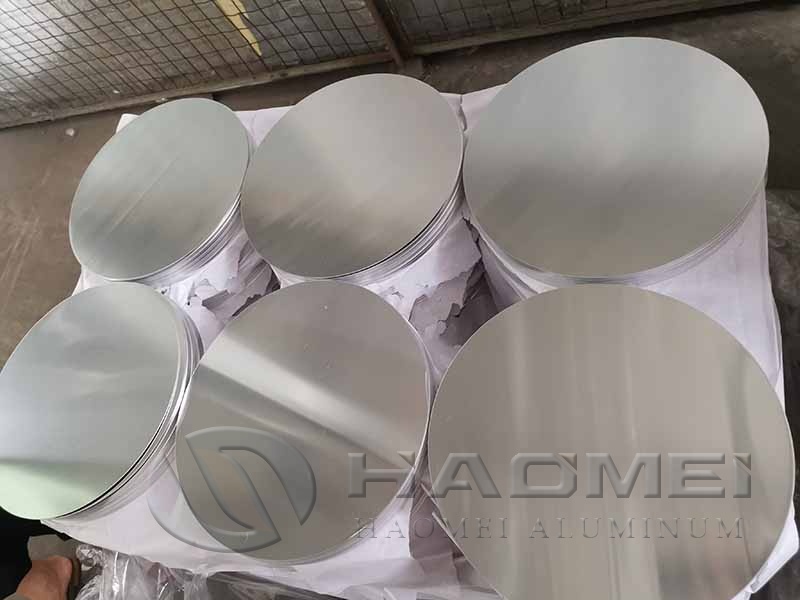
For standard cookware blanks, specify the exact product instead of relying on a generic term. An Aluminum Circle order can include different alloys, diameters, tempers, and surface conditions. Put the approved specification revision on the purchase order, test certificate request, and incoming-inspection sheet.
Schedule Supply Around Closures and Freight Cutoffs
Holiday readiness depends on dates that can be checked. Work backward from the final press date, not from the retail promotion date. Include disc production, inspection, packing, export documentation, port handling, transit, customs clearance, receiving inspection, and contingency stock.
A practical schedule has three control points:
Specification freeze. Freeze diameter, thickness, temper, surface, package quantity, and labeling before the supplier allocates production capacity.
Pre-shipment evidence. Require a packing list, material certificate, pallet count, net and gross weights, and photos of labels and finished pallets before dispatch.
Arrival buffer. Plan receiving time for dimensional checks, surface inspection, and first-press confirmation before the line needs the material.
For seasonal quotes, compare offers on a delivered-cost basis. Ask each supplier to separate the metal basis, fabrication or conversion charge, packing charge, inland freight, international freight, insurance, duties where applicable, and payment terms. If a quotation references an aluminum market index, identify the index, pricing date, currency, premium, and validity period. This makes quotation comparisons auditable without assuming that a stated per-ton price includes the same services.
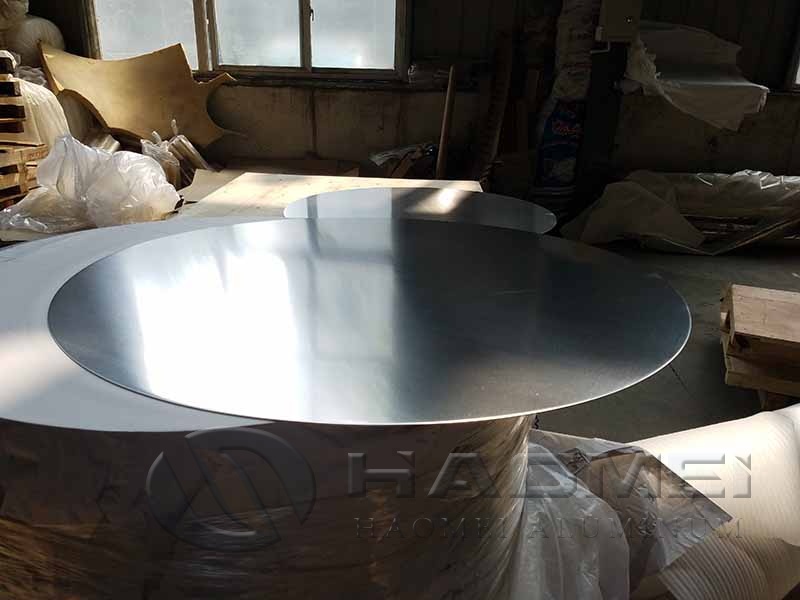
A supplier with available Aluminum Disc Circles inventory may support short replenishment cycles, but verify that stock meets the approved temper, dimensions, inspection records, and packaging requirements. Inventory availability alone does not prove interchangeability with a qualified production blank.
Pre-Holiday Release Checklist
Confirm final production date and the last acceptable receiving date.
Lock alloy, temper, diameter, thickness, tolerances, and surface acceptance criteria.
Approve a forming sample for new tooling or deeper draw operations.
Verify applicable standard references and destination-market documentation needs.
Request certificate, packing list, pallet labels, and pre-shipment photos.
Confirm carrier cutoff dates, customs documents, and holiday closure calendars.
Reserve safety stock based on actual daily press consumption and approved storage conditions.
Original source: https://www.hm-alu.com/a/aluminum-discs-for-sale.html