


How Thick Is 16 Gauge Aluminum
Gauge is a North American standard for metal gauges, specifically used to indicate the thickness of non-ferrous metal sheets. It differs from the Chinese national standard's millimeter-level marking method, and a higher GA number indicates a thinner actual aluminum sheet.
16GA aluminum sheet
Based on the North American ASTM B209 standard and industry-standard gauge conversion data, it has a standard thickness of 0.0508 inches, equivalent to 1.29 mm. This is considered the ideal thickness for both industrial and civilian applications, balancing toughness and strength. It is not considered ultra-thin, nor does excessive thickness increase processing and transportation costs, making it highly adaptable.
In the sheet metal market, 16GA aluminum sheets have fixed mainstream sizes, allowing for direct procurement without customization, significantly improving construction efficiency. The 16 gauge aluminum sheet 4x8 (1220mm×2440mm) is the most core standard size and also the largest stock size in the hardware market, perfectly suited for standard sheet metal cutting, equipment housing fabrication, decorative wall panels, and other applications.
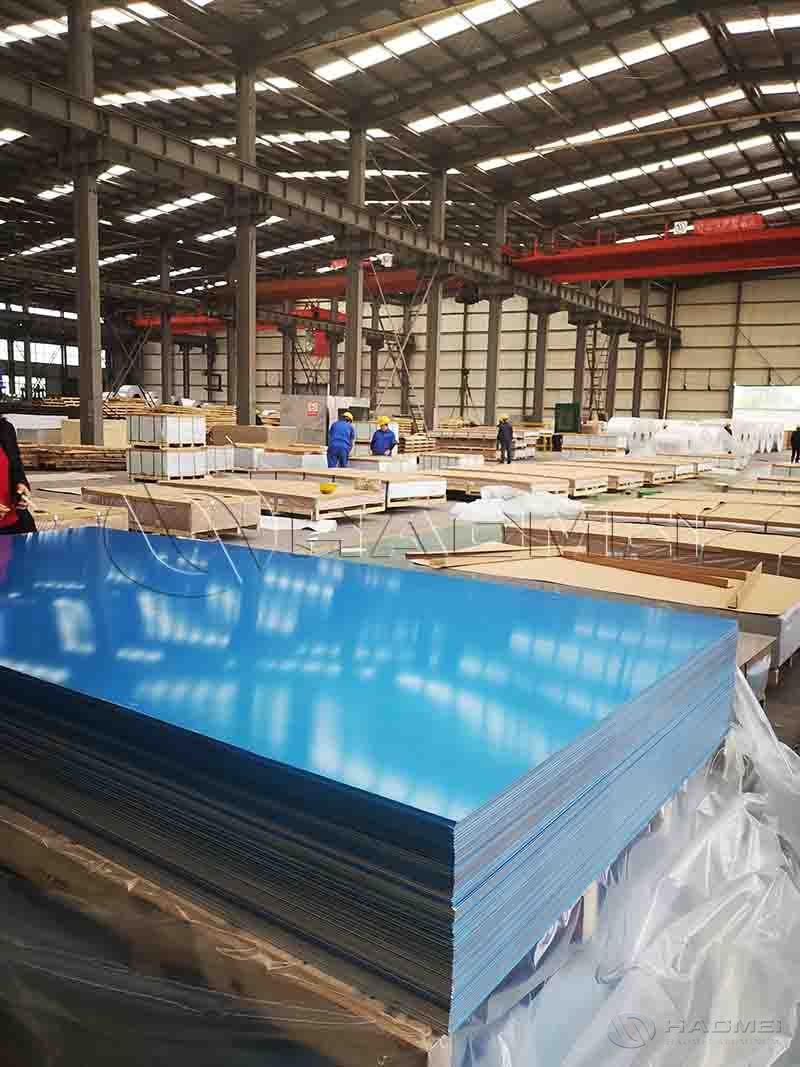
In addition to its standard size, 16GA aluminum sheet is often paired with larger 5×10-foot sheets, as well as standard metric sizes such as 1000mm×2000mm and 1500mm×3000mm, to meet the needs of large-area paving and large equipment processing.
From a performance and application perspective, 16GA aluminum sheet has a moderate thickness and excellent hardness, bending resistance, and load-bearing capacity. It is not easily deformed or dented and can be bent, drilled, welded, polished, and processed.
It is mainly used for applications requiring a certain level of sheet strength, such as machinery housings, industrial chassis and cabinets, outdoor decorative curtain walls, kitchen equipment panels, and hardware accessory substrates. It is a versatile medium-thick aluminum sheet that balances cost-effectiveness and practicality.
28 GA aluminum sheet
In stark contrast to 16GA aluminum sheet, 28 gauge aluminum sheet is an ultra-thin aluminum sheet with a standard thickness of only 0.0126 inches (0.32mm), less than a quarter the thickness of 16GA aluminum sheet. It is lightweight, thin, and extremely flexible, representing a typical specification for thin aluminum sheets.
In terms of size, 28ga aluminum sheets also use 4×8 feet (1220mm×2440mm) as the core universal size. This is also the most suitable standard specification for thin sheets, with regular dimensions, low cutting waste, and suitable for mass production. A small quantity of 4×10 feet and custom-made smaller sizes of 28ga aluminum sheets are also available on the market, mainly for precision small parts processing. Due to the ultra-thinness of the sheet, large-size 28ga aluminum sheets are generally distributed in coils or as flat sheets to avoid bending and damaging the flatness of the sheet.
The biggest characteristics of 28ga aluminum sheets are their light weight, easy bending, and high plasticity, but they have poor rigidity and almost no load-bearing capacity, making them unsuitable for load-bearing structural parts. Their core applications are concentrated in lightweight decoration and auxiliary substrates, commonly found in interior ceiling decoration, wall aluminum veneer panels, thermal insulation aluminum sheets, internal insulation panels for electrical appliances, and thin aluminum substrates for advertising signs. They emphasize lightness, ease of shaping, and low cost, but are not suitable for load-bearing or pressure-resistant applications.
Summary of Key Differences Between 16GA and 28GA Aluminum Sheets
To facilitate quick selection, here's a brief summary of the core differences between the two to avoid mispurchasing:
1. Thickness Difference: 16GA aluminum sheet is 1.29mm thick, a medium-thickness universal design with sufficient rigidity; 28GA aluminum sheet is 0.32mm thick, an ultra-thin and lightweight design with high flexibility.
2. Size Commonality: Both have a mainstream standard size of 4×8 feet, suitable for most common processing scenarios, and other standard sizes can be customized upon request.
3. Performance and Application: 16GA emphasizes structure, load-bearing, and forming, suitable for industrial, outdoor, and load-bearing components; 28GA emphasizes decoration, substrate, and thermal insulation, suitable for lightweight indoor decoration and auxiliary substrates.
Original source: https://www.hm-alu.com/a/how-thick-is-16-gauge-aluminum.html
Tags: aluminum sheet thickness
Prev: Aluminum Circle
Next: Aluminum Gutter Coil