

1100 Aluminum Plate Suppliers
Potential purchasers searching for 1100 aluminum plate suppliers often ask the same practical questions across Google, Quora, and industry forums. In the past three months, most discussions have focused on pricing, thickness tolerance, temper selection, supplier credibility, and minimum order quantity. The answers below are written for people comparing mills, traders, and exporters for the first time.
1. How do I choose reliable 1100 aluminum plate suppliers instead of just the cheapest one?
This is one of the most common questions because low prices can hide risks. A reliable supplier should be able to explain the alloy clearly, provide test certificates, confirm the temper, and share realistic production tolerances. For 1100 aluminum plate, good suppliers usually discuss aluminum purity, flatness, surface finish, packaging method, and whether the material is for cookware, chemical equipment, signage, or deep drawing.
A fast way to screen suppliers is to ask five things at once: alloy standard, temper available, thickness range, delivery lead time, and export packaging details. If the response is vague, copied, or avoids tolerance data, that is usually a warning sign. Strong suppliers can also recommend alternatives if your application needs slightly different strength or formability, such as options within their Aluminum Sheet Plate range.
Here is a practical comparison table:
| Checkpoint | Reliable Supplier Signal | Risk Signal |
|---|---|---|
| Material certificate | Provides MTC or test report | Says certificate is unavailable |
| Thickness tolerance | Gives clear range in mm | Says tolerance is "standard" only |
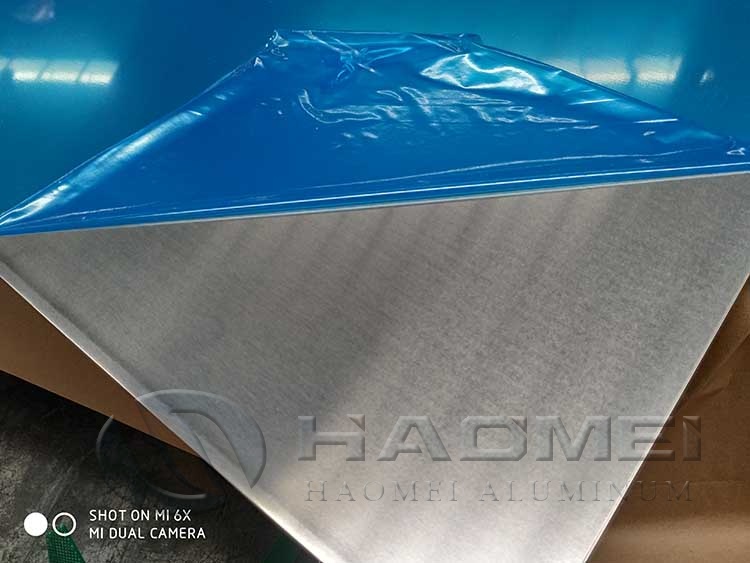
| Surface quality | Explains film, paper, or bare finish | Avoids surface discussion |
| MOQ | Gives flexible options or explains mill MOQ | Changes MOQ frequently |
| Delivery promise | Gives production schedule and port plan | Promises unrealistically fast shipment |
2. What price factors matter most when comparing 1100 aluminum plate suppliers?
Many people ask why quotations for the same 1100 aluminum plate differ so much. The answer is that plate pricing is not based on alloy name alone. Thickness, width, length, temper, quantity, packaging, destination port, and metal market fluctuation all affect the final offer.
For example, a thin plate with protective film and precise cut-to-size service may cost more per ton than a standard stock size. Small trial orders are also usually priced higher than regular batch orders because setup and packaging costs are spread across fewer pieces. Export buyers should also ask whether the quote is based on actual weight or theoretical weight, because this can change the landed cost.
Another overlooked factor is inspection level. If your project needs tighter flatness or better surface appearance, the processing standard may be higher. That often raises the price, but it can lower your rejection rate later. So the better question is not just, "Who offers the lowest price?" but, "What exactly is included in the price?"
3. Which temper and thickness should I request for 1100 aluminum plate?
This question appears often because many first-time purchasers know the alloy but not the temper. 1100 aluminum plate is known for high aluminum content, very good corrosion resistance, excellent workability, and strong thermal and electrical conductivity. It is not selected for high-strength structural use. It is usually chosen for forming, decorative, chemical, food-related, or general industrial applications.
Common tempers include O, H14, H16, H18, and sometimes H24, depending on the supplier and thickness range. If the material must be bent, spun, or deep drawn, softer tempers such as O are often preferred. If you need improved rigidity for panels or covers, H14 or H24 may be more suitable.
The table below gives a simple reference:
| Requirement | Often Preferred Temper | Why |
|---|---|---|
| Deep drawing | O | Best ductility |
| General bending | O or H14 | Easier forming |
| Better rigidity | H14 or H24 | More strength than O |
| Decorative panel use | H14, H24 | Balance of formability and firmness |
| High conductivity use | Depends on design | Alloy remains highly conductive |
Thickness should be matched to end use, not guessed. A signage panel may need only a thin gauge, while a spacer plate or industrial cover may need thicker material. If you are unsure, experienced suppliers can compare your use case with products in their Different Thickness Aluminum Sheet -- Haomei offering and suggest a workable range.
4. How can I verify the quality of 1100 aluminum plate before placing a bulk order?
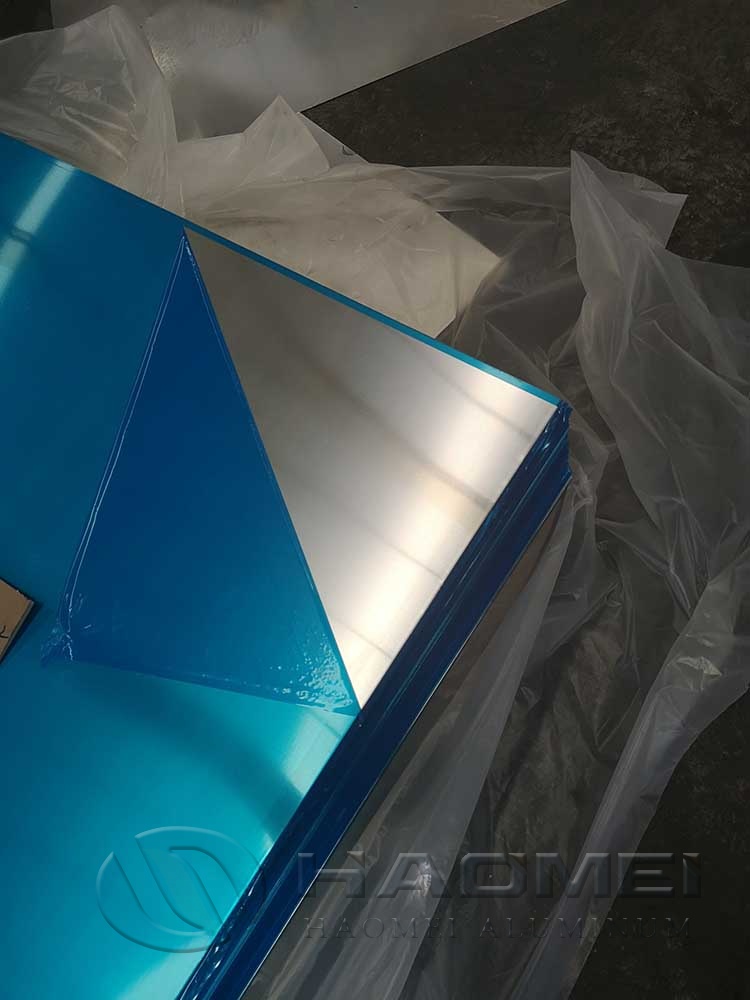
This is a very practical concern, especially for importers. The safest approach is to request both documents and physical proof. Ask for the mill test certificate, photos or videos of stock, packaging images, and a sample if your volume justifies it. For repeat products, ask the supplier to confirm the same source and process route for future orders as well.
Quality verification should include these points:
| Item to Verify | What to Ask |
|---|---|
| Chemical composition | Is it certified as 1100 alloy under the requested standard? |
| Mechanical properties | Can the supplier provide temper-related property data? |
| Surface | Are there scratches, oil marks, roller marks, or edge defects? |
| Size accuracy | What are the thickness, width, and length tolerances? |
| Packaging | Is there moisture protection for sea shipment? |
For bulk international orders, it is also smart to ask whether third-party inspection is accepted before loading. Serious suppliers generally do not resist this. If they hesitate to confirm quality in writing, that is often more important than the quoted price.
5. What MOQ and delivery time should I expect from 1100 aluminum plate suppliers?
Over the past three months, this has been one of the hottest search questions because many companies now want smaller trial purchases before committing to larger volume contracts. MOQ depends on whether the supplier is a mill, a stockist, or a trading company. Mills often prefer larger quantities per size and temper, while stockists may support mixed sizes in smaller volumes if the material is already available.
Delivery time also depends on whether you need stock material or custom rolling and cutting. Stock orders may move quickly, while custom specifications usually require extra production days. The main thing is to ask for a timeline that includes production, inspection, packing, inland transport, and vessel booking, not just the factory completion date.
A useful benchmark table:
| Order Type | Typical MOQ Trend | Delivery Trend |
|---|---|---|
| Stock size order | Lower | Faster |
| Custom size order | Medium to higher | Slower |
| Mixed specification trial order | Depends on inventory | Moderate |
| Regular repeat order | Easier to negotiate | More stable |
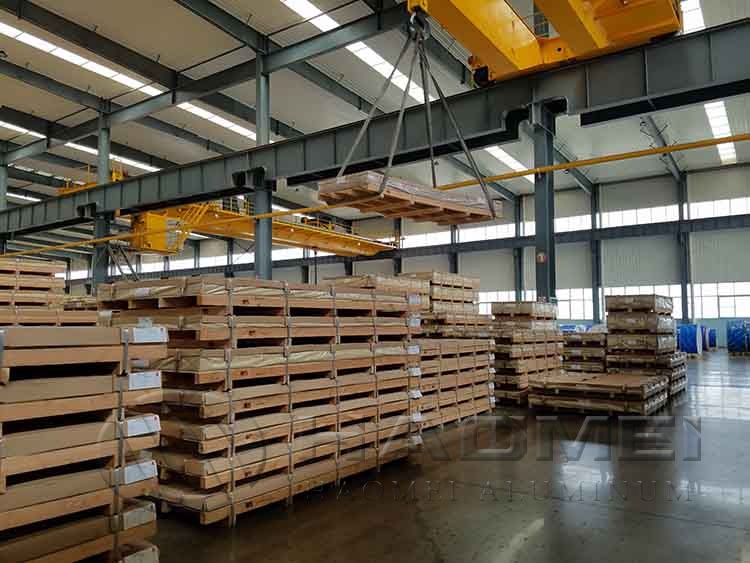
For new purchasers, the most effective approach is to compare suppliers using the same inquiry sheet. Include alloy, temper, thickness, width, length, application, quantity, destination port, and packaging requirement. That makes supplier responses easier to compare and reveals who truly understands 1100 aluminum plate rather than simply sending a generic quotation.
Original source: https://www.hm-alu.com/a/1100-aluminum-plate-suppliers.html
Tags:1100 Aluminum Plate Suppliers 1100 aluminum plate 1100 aluminum plate price 1100 aluminum plate manufacturer 1100 aluminum plate factory
Prev: Which One to Choose: 1050 or 3003 Aluminum Circle for Cookware