

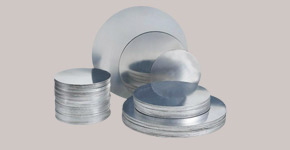
Aluminum Circle Blanks
Aluminum Circle Blanks: Control Flatness and Burrs Before Production
For high-volume cookware, lampshades, pressure vessels, traffic signs, and industrial spinning parts, the most expensive problem is not the metal price. It is inconsistent forming yield. A disc that looks acceptable at receiving can crack during deep drawing, orange-peel after annealing, scratch a non-stick coating line, or damage a die because of excessive burr.
This article focuses on one production-critical concern: flatness and burr control. These two properties directly affect die life, spinning stability, coating quality, nesting efficiency, and scrap rate.
What a circle blank must deliver
An aluminum round blank is a punched or cut disc made from rolled aluminum feedstock. It is usually supplied in O, H12, H14, H16, or H18 temper depending on the downstream process.
Common alloy families include 1xxx for high ductility and reflectivity, 3xxx for cookware and general forming, and 5xxx when higher strength or better corrosion resistance is required. For most cookware and utensil projects, 1050, 1060, 1070, 1100, and 3003 are widely specified.
Typical physical reference values are well established: aluminum density is about 2.70 g/cm³, melting point is about 660°C, and commercially pure aluminum has thermal conductivity around 235 W/m·K. Alloying lowers conductivity but improves strength and other working properties.
For sourcing teams comparing Aluminum Circle specifications, do not stop at alloy and thickness. The purchase specification should also define camber, flatness, surface finish, lubrication, burr direction, burr height, grain condition, and annealing state.
Alloy and temper selection table
| Alloy | Usual tempers | Practical strengths | Typical applications | Watch point |
|---|---|---|---|---|
| 1050 / 1060 | O, H12, H14 | High formability, good conductivity | Cookware, reflectors, utensils | Lower strength than 3xxx |
| 1070 | O, H12 | High purity and reflectivity | Lighting, decorative spinning | Surface handling must be strict |
| 1100 | O, H14 | Excellent workability, general corrosion resistance | Drawn parts, covers, kitchenware | Confirm chemical limits by standard |
| 3003 | O, H14, H16 | Better strength than 1xxx, good forming | Non-stick pans, pressure cookers, utensils | Needs correct anneal for deep drawing |
| 5052 | O, H32 | Higher strength, marine corrosion resistance | Covers, signs, special vessels | Less forgiving in severe drawing |
For deep drawing, O temper is often preferred. For shallow stamping or spinning, H12 or H14 may improve handling and reduce deformation during transport. The safest approach is to match temper to the most severe forming step, not to the warehouse handling preference.
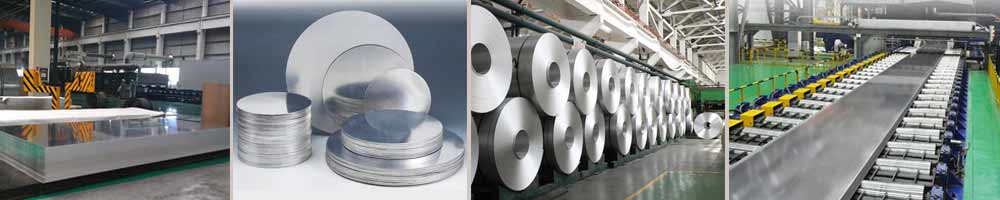
Process flow and control points
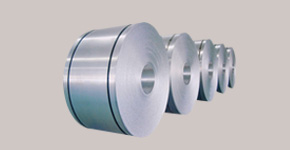
A reliable disc program starts before blanking. The upstream rolled metal must have stable thickness, clean surface, and suitable metallurgical condition.
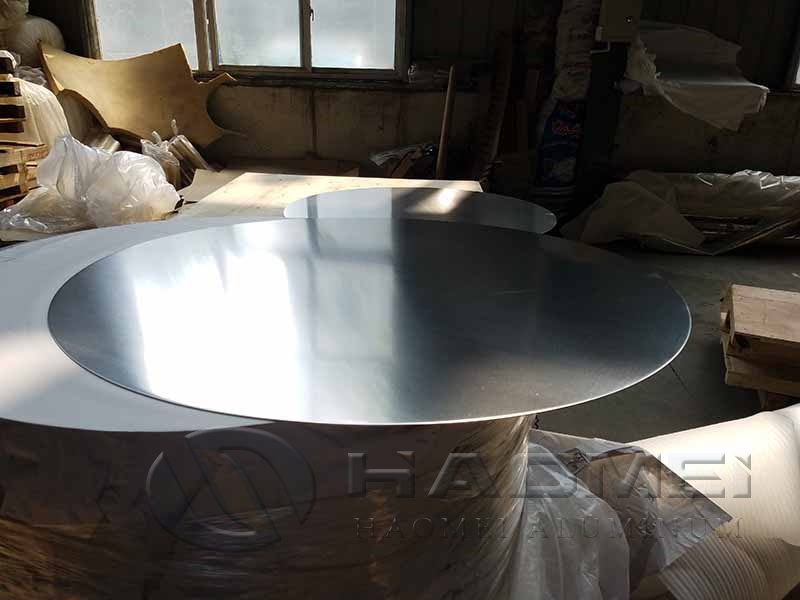
Recommended process control sequence:
- Confirm chemistry against AA registration, EN 573, or the contract standard.
- Roll to target gauge with documented thickness tolerance.
- Slit or level feedstock to reduce internal stress and waviness.
- Blank discs using sharp tooling, correct clearance, and controlled press speed.
- Anneal when required to reach drawing temper and uniform grain structure.
- Deburr or brush if the application is die-sensitive or food-contact visible.
- Degrease and dry when coating, anodizing, or laminating follows.
- Pack vertically or horizontally according to diameter, thickness, and risk of edge damage.
Burr is largely created by punch-to-die clearance and tool wear. If clearance is too small, galling and high press load appear. If clearance is too large, rollover and fracture zone increase. Flatness is affected by feedstock leveling, blanking stress, annealing, stacking pressure, and transport vibration.
Inspection checklist before release
| Inspection item | Method | Recommended contract wording |
|---|---|---|
| Diameter | Caliper or optical system | Nominal diameter plus tolerance in mm |
| Thickness | Micrometer at multiple points | Refer to ASTM B209 or EN 485 tolerance class where applicable |
| Burr height | Profilometer or feeler method | Maximum burr height and burr direction stated |
| Flatness | Surface plate or defined gap method | Maximum bow or wave per disc diameter |
| Surface | Visual under agreed lighting | No oil stain, black line, scratch, oxidation, or indentation beyond limit sample |
| Temper | Tensile test or hardness correlation | O, H12, H14, H16, H18 as ordered |
| Traceability | Mill certificate and lot code | Heat, coil lot, blanking batch, and packing list linked |
For cookware, add a forming trial clause. A small retained sample from each lot should pass the customer's actual draw depth, die radius, and lubricant system. Laboratory elongation data is useful, but plant forming behavior is the real risk filter.
Applications and specification emphasis
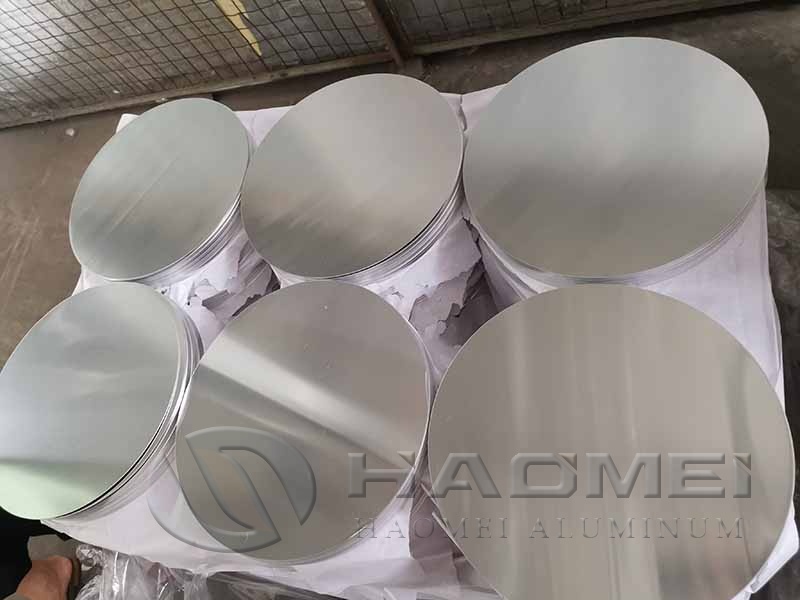
Cookware and utensils need clean surfaces, stable anneal, low burr, and predictable earing behavior. Earing is related to crystallographic texture; severe earing wastes metal and creates trimming problems after drawing.
Lighting reflectors need surface brightness and low handling marks. Traffic signs need dimensional consistency and coating readiness. Industrial spinning parts need uniform hardness across the disc, because hard spots can cause chatter or uneven wall thickness.
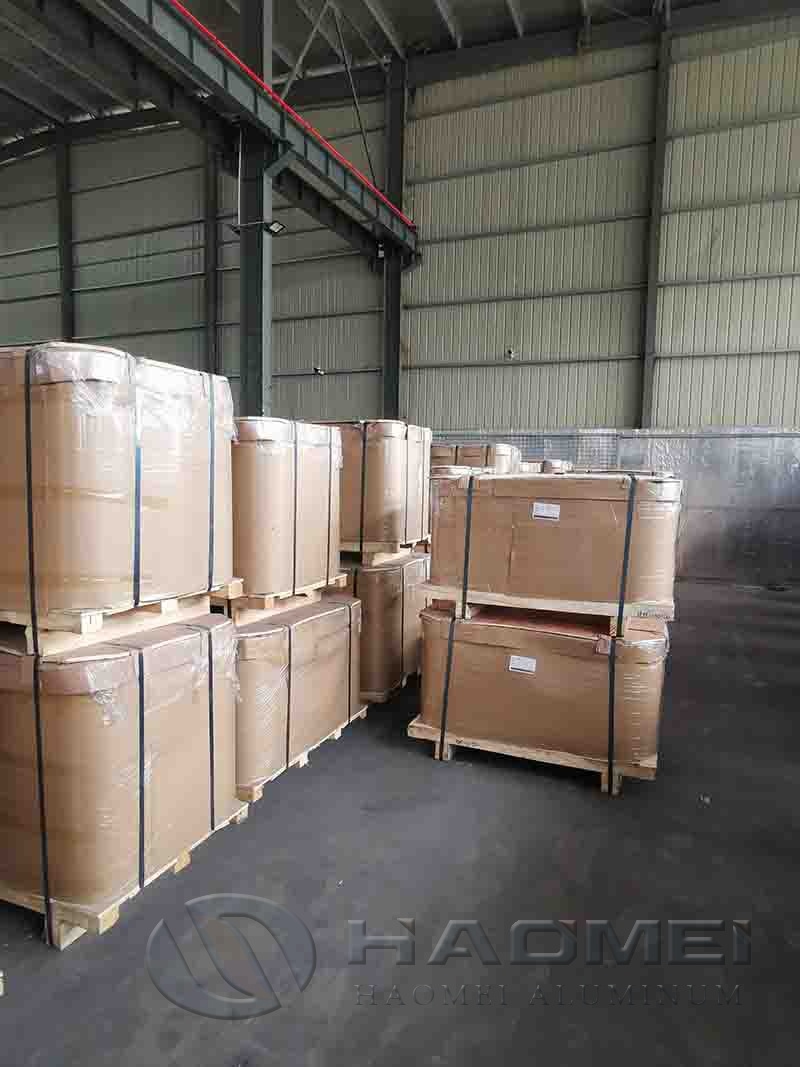
When ordering Aluminum Circles for automated lines, specify stacking height, paper interleaving, pallet weight, and maximum allowed disc slip. These packaging details prevent feeding jams and edge bruising.
Standards and compliance references
Use recognized standards rather than private descriptions only. Common references include ASTM B209 for aluminum flat products in the United States, EN 485 for mechanical properties and tolerances, EN 573 for chemical composition, and ISO 6361 for wrought aluminum products in international trade.
For food-contact cookware, metal substrate requirements are often combined with coating and finished-article rules. In the EU, Regulation (EC) No 1935/2004 covers materials intended to contact food, and Regulation (EC) No 2023/2006 covers good manufacturing practice. In the United States, FDA requirements depend on finished food-contact use and any coating system. RoHS and REACH may apply when discs are used in electrical, lighting, or exported consumer goods.
Ask suppliers for mill test certificates, chemical composition, mechanical properties, lubricant declaration if relevant, and packaging material compliance. If anodizing or non-stick coating follows, request surface oil limits and cleaning compatibility.
Cost structure and market cycle signals
The delivered price of round blanks normally reflects:
| Cost component | What to monitor | Practical action |
|---|---|---|
| Primary aluminum value | LME Official Price or other exchange reference | Lock pricing period or use formula pricing |
| Regional premium | Midwest premium, European duty-paid premium, or local premium | Compare origin and delivery region |
| Conversion charge | Rolling, annealing, blanking, inspection | Separate metal value from processing cost |
| Scrap credit | Web scrap from blanking layout | Confirm whether scrap value is included in quotation |
| Freight and packing | Pallet type, container loading, inland transport | Optimize diameter mix and pallet weight |
| Duty and trade measures | HS classification, origin, anti-dumping measures | Verify with customs adviser before contract |
Aluminum is cyclical. Prices respond to energy costs, alumina supply, smelter curtailments, exchange inventories, interest rates, and demand from transport, packaging, construction, and electrical sectors. Because smelting is power-intensive, energy disruptions can affect premiums even when exchange prices are stable.
For high-volume programs, avoid buying only on spot offers. Use a monthly formula tied to a published aluminum reference plus a fixed conversion charge, with clear rules for premium, foreign exchange, and freight adjustment. This reduces disputes when the market moves quickly.
Supply chain risk controls
Use this purchasing checklist before issuing a production order:
- Approve alloy, temper, thickness, diameter, and tolerance in writing.
- Define burr height, flatness, surface class, and accepted lubricant condition.
- Require lot traceability from mill input to packed disc pallet.
- Request retained samples and photos of packing before shipment.
- Run a pilot forming test before full container release for new dies or new suppliers.
- Set claim rules for mixed diameter, oxidation, water stain, transit dent, and edge damage.
- Confirm standards, certificates, and food-contact or electrical compliance documents.
A well-written specification does not make purchasing slower. It prevents avoidable claims, die stoppages, coating defects, and emergency replacement orders.
Original source: https://www.hm-alu.com/a/aluminum-circle-blanks.html
Tags:Aluminum Circle Blanks Aluminum Discs Cookware Aluminum Deep Drawing Aluminum
Prev: 1100 Aluminum
Next: Aluminum Circle Sheet