

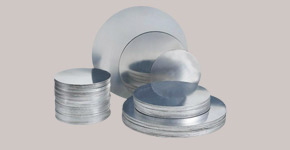
Aluminum Circle Sheet
Holiday cookware demand needs drawable blanks, not emergency rework
On 7 May 2026, kitchenware programs are already inside a compressed holiday window. U.S. Mother's Day falls on 10 May 2026, while Eid al-Adha is expected in late May 2026, depending on local moon sighting. For export cookware factories, the same planning cycle now feeds summer wedding sets, Diwali 2026 kitchen promotions, and Christmas gift packs.
The pressure point is not only metal availability. The main concern is drawability consistency. If one batch of round blanks splits, wrinkles, or scratches during forming, a gift-set campaign can lose finished pan capacity before packaging even starts.
An aluminum circle sheet works as a holiday solution because the blanking operation is completed before material reaches the press shop. That removes coil slitting, nesting loss, and urgent die changeovers from the peak season schedule.
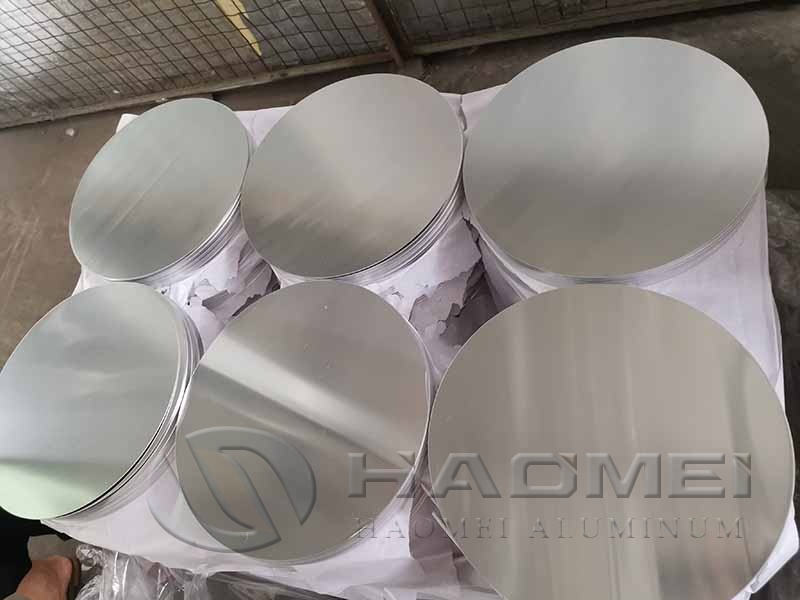
For cookware, the round blank must be treated as a forming component, not a simple metal disc. High-volume purchasers should specify alloy, temper, thickness, diameter tolerance, burr control, and surface condition before confirming production slots.
Specify the circle before the holiday order window
The most common cookware choices are 1050, 1060, 1100, and 3003 aluminum alloys. Pure aluminum grades such as 1050 and 1060 are widely used for deep-drawn utensils because they offer high ductility and thermal conductivity. Published engineering references place pure aluminum thermal conductivity at about 237 W/m·K at room temperature, compared with far lower values for many carbon steels. Aluminum density is about 2.70 g/cm3, which supports lighter cookware shipping weights.
For deeper pots, rice-cooker liners, and pressure-cooker components, O temper is usually preferred because annealing improves elongation. For shallow lids, trays, and less severe forming, H12 or H14 may be acceptable when extra stiffness is needed.
Use this comparison before placing a seasonal order.
| Holiday cookware item | Practical material choice | Why it reduces holiday risk | What to confirm |
|---|---|---|---|
| Deep-drawn pot body | 1050, 1060, or 1100 O temper | Better elongation for severe forming | Erichsen or cupping test result if required |
| Fry pan or saucepan blank | 3003 O or H14, depending on design | More strength than pure aluminum grades | Drawing ratio, coating plan, flatness |
| Cake mold or tray | 1050/1060 O or H12 | Clean forming and light weight | Surface scratches, oil stain control |
| Lid or shallow utensil | 3003 H14 or 1050 H14 | Holds shape after shallow stamping | Diameter tolerance and edge burr |
Standards should be named in the purchase document. ASTM B209/B209M covers aluminum and aluminum-alloy sheet and plate. EN 573-3 defines chemical composition for wrought aluminum alloys, while EN 485 covers technical delivery conditions and tolerances for sheet, strip, and plate in the European system. These standards do not replace a forming trial, but they make alloy and tolerance language auditable.
For food-contact cookware, also separate the aluminum blank from the final coated article. In the EU, Regulation (EC) No 1935/2004 sets the general requirement that food-contact materials must not endanger human health or change food composition in an unacceptable way. Coatings, anodizing, cleaning agents, and finished-article migration testing must be reviewed with the final cookware design, not assumed from the blank alone.
A strong offer for Aluminum Circle programs should include mill test certificates, batch traceability, diameter inspection records, and packing photos before dispatch.
Control drawability with measurable purchase terms
Do not order round blanks by alloy and diameter only. During holiday production, vague terms create rework. Use a measurable checklist.
| Purchase term | Required instruction | Factory impact |
|---|---|---|
| Alloy | State 1050, 1060, 1100, 3003, or approved equivalent | Prevents unexpected chemistry changes |
| Temper | State O, H12, H14, or trial-approved temper | Controls elongation and springback |
| Thickness | State nominal thickness and tolerance standard | Stabilizes weight and forming pressure |
| Diameter | State nominal size and allowable tolerance | Prevents flange mismatch and die jamming |
| Burr | Set a maximum after trial approval, such as 0.05 mm when die clearance requires it | Reduces scratches, operator injury, and coating defects |
| Surface | Require mill finish, degreased, or lubricated surface as needed | Controls drawing marks and cleaning cost |
| Packing | Use dry pallets, moisture barrier, and edge protection | Prevents white rust and transit abrasion |
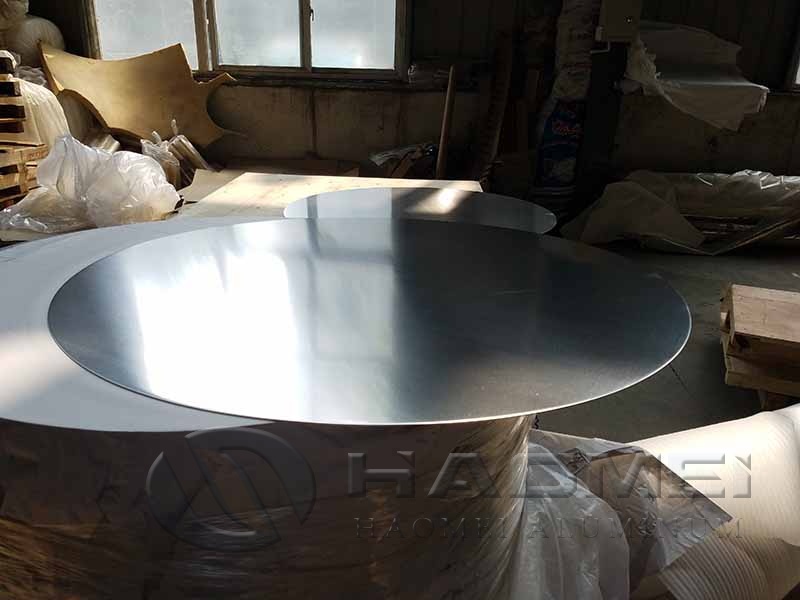
Burr control deserves special attention. A sharp edge can scratch the next blank in the stack, damage a coating line, or create safety complaints during manual loading. For cookware plants running several SKUs before a festival, even small burr variation can force press operators to slow down.
Ask the supplier to state how circles are produced: blanking press, CNC cutting, or continuous circle line. For repeated cookware diameters, press blanking with maintained tooling is normally faster and more consistent than ad hoc cutting. For trial sizes or oversized discs, CNC cutting may be useful, but edge finishing and flatness must be checked.
| Option | Better for | Holiday advantage | Watch point |
|---|---|---|---|
| Pre-cut aluminum discs | Repeated pan and pot sizes | Press shop starts forming immediately | Requires accurate forecast by diameter |
| Sheet cut in-house | Mixed prototypes | Flexible for small test runs | Adds labor and scrap during peak weeks |
| Coil blanking in-house | Very high continuous output | Full control after coil receipt | Needs slitting, tooling, and trained operators |
For large seasonal programs, Aluminum Circles can reduce bottlenecks when each pallet is labeled by alloy, temper, thickness, diameter, heat number, and net weight.
Pricing should also be transparent. Aluminum is commonly priced with reference to London Metal Exchange aluminum prices, plus regional premium, conversion cost, packing, and freight. LME publishes official aluminum prices on trading days, making the metal reference auditable. Incoterms 2020 should be named, such as FOB, CFR, or CIF, because cost and risk transfer are different under each term.
Use this holiday order sequence instead of an open-ended request.
Send the finished cookware drawing, not only the blank diameter.
Confirm alloy, temper, thickness, and surface condition.
Run a forming trial with the actual die and lubricant.
Approve burr limit, flatness, and visual defect standard.
Lock packing method for ocean or inland humidity conditions.
Name the pricing formula, quote validity, currency, and Incoterms 2020 term.
Reserve production space by diameter group to reduce tooling change time.
Require shipment photos, mill test certificate, and inspection report before dispatch.
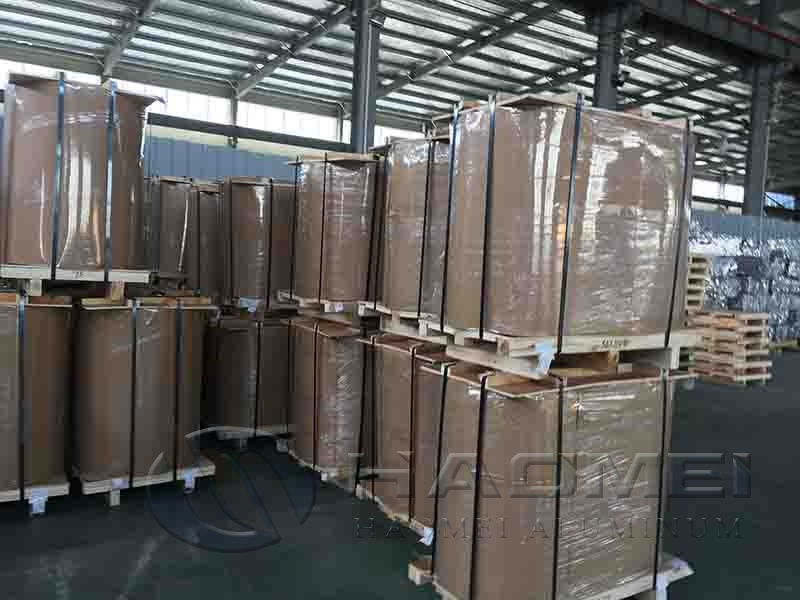
| Order document field | Fill in before release |
|---|---|
| Seasonal program | Mother's Day replenishment, Eid kitchenware, wedding set, Diwali set, Christmas set |
| Product | Round aluminum cookware blank |
| Alloy and temper | Example: 1060 O for deep drawing, subject to trial approval |
| Size | Thickness, diameter, tolerance standard |
| Quantity split | By diameter, pallet, and shipment batch |
| Quality proof | MTC, dimensional report, surface inspection, burr record |
| Compliance file | ASTM B209/B209M or EN 573-3 and EN 485 reference, plus finished food-contact plan |
| Commercial term | LME reference date, premium, conversion, freight, Incoterms 2020 term |
| Dispatch control | Packing photos, pallet labels, moisture protection, vessel or truck schedule |
Original source: https://www.hm-alu.com/a/aluminum-circle-sheet.html
Tags:aluminum circle sheet aluminum circles cookware blanks deep drawing aluminum
Prev: Aluminum Circle Blanks