

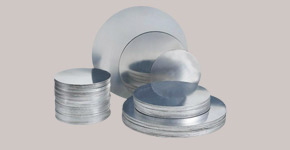
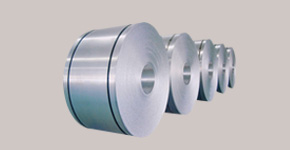
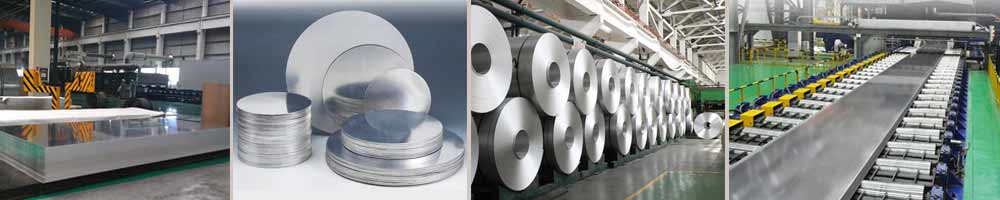
1000 Series Aluminum Sheet
1000 Series Aluminum Sheet: Solve Purity Risk Before Ordering
For high-volume industrial sourcing, the biggest concern with 1000 series aluminum is not only price. It is whether the delivered metal truly meets the required purity, temper, surface, and dimensional standard. A small mismatch can cause stamping cracks, poor anodizing, unstable conductivity, or rejection during incoming inspection.
Commercially pure aluminum is widely used in cookware, lighting reflectors, packaging components, signs, heat exchangers, electrical parts, chemical equipment, and decorative panels. The 1xxx family is valued for corrosion resistance, formability, thermal conductivity, and clean surface response.
What 1000 Series Means in Standards
The Aluminum Association designation system defines 1xxx wrought aluminum as commercially pure aluminum, generally 99.00% minimum aluminum. Common grades include 1050, 1060, 1070, and 1100. Exact chemistry must be checked against the contract standard, such as ASTM B209/B209M, EN 573, EN 485, GB/T 3880, or JIS H4000.
| Grade | Typical minimum Al content | Practical strength | Common use case |
|---|---|---|---|
| 1050 | 99.50% | Low | Deep drawing, reflectors, nameplates, chemical containers |
| 1060 | 99.60% | Low | Heat transfer parts, battery components, kitchenware, signs |
| 1070 | 99.70% | Low | Electrical parts, anodized decorative products, precision stamping |
| 1100 | 99.00% | Slightly higher than 1050/1060 | General fabrication, food equipment, architectural panels |
If the application needs stronger mechanical performance, compare 1xxx with Aluminum Alloy Sheet options such as 3003, 5052, or 6061. For pure aluminum, strength is improved mainly by cold working, not heat treatment.
Main Product Feature: High Purity, Stable Processing
High aluminum purity gives 1xxx material its most valuable advantages: excellent ductility, good corrosion resistance, high reflectivity, and strong thermal performance. These benefits are most visible when the material is stamped, spun, drawn, polished, or anodized.
The trade-off is strength. If the part must carry structural load, 1000 series may be unsuitable unless thickness, temper, and forming design are carefully engineered.
| Requirement | Why 1xxx performs well | Risk if specified poorly |
|---|---|---|
| Deep drawing | Soft matrix supports deformation | H18 temper may crack under severe forming |
| Heat transfer | High purity supports thermal conductivity | Surface oil or oxide may reduce bonding quality |
| Anodizing | Clean chemistry supports uniform appearance | Mixed scrap chemistry may create color variation |
| Electrical use | High purity supports conductivity | Wrong alloy may fail resistance targets |
| Food contact equipment | Good corrosion resistance in many environments | Must still meet local food-contact rules |
Choose Alloy and Temper by Process
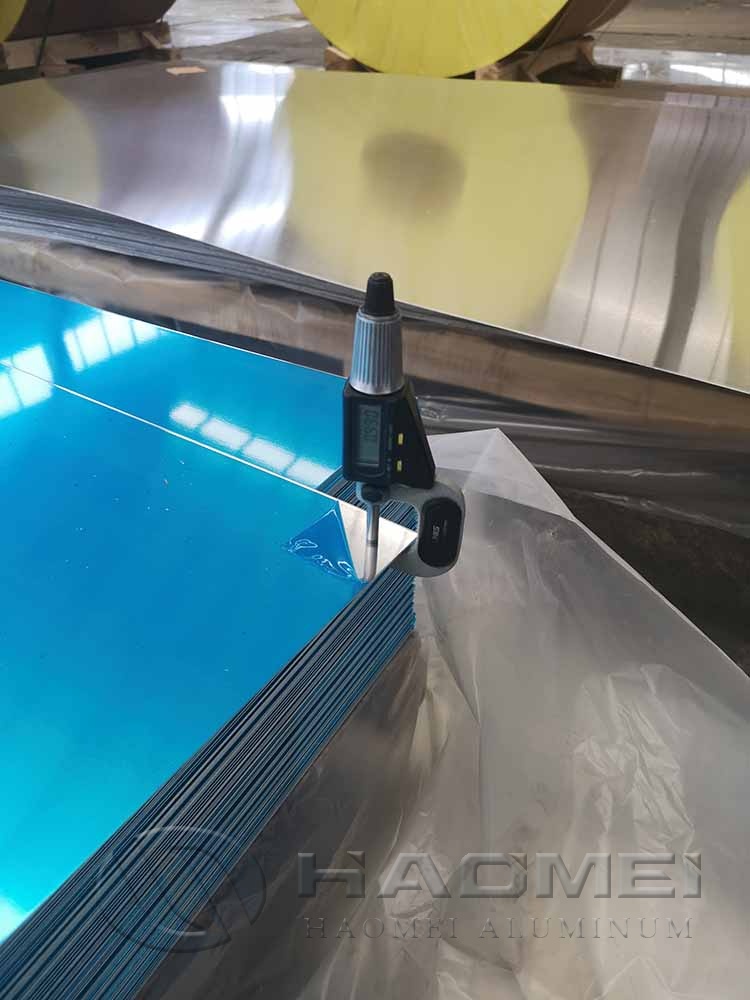
Temper selection often decides whether production runs smoothly. The common choices are O, H12, H14, H16, and H18. O temper is annealed and soft. H18 is hard and less formable. H14 is often selected when a balance of moderate strength and workability is required.
| Process | Recommended starting point | What to verify before release |
|---|---|---|
| Deep drawing | 1050 O or 1060 O | Elongation, grain direction, lubrication, bend radius |
| General stamping | 1050 H14 or 1060 H14 | Burr control, flatness, die clearance |
| Reflector parts | 1050 or 1070 | Surface cleanliness, reflectivity requirement, protective film |
| Electrical parts | 1060 or 1070 | Conductivity target, chemistry report, surface oxidation |
| Decorative anodizing | 1070 or high-purity 1050 | Color consistency, scratch limits, batch traceability |
For projects that require flat products across several dimensions, Aluminum Sheet Plate selection should include alloy, temper, thickness, width, length, tolerance class, surface finish, and packaging method in one written specification.
Purity Verification Checklist
Do not rely on grade name alone. Ask for documents that connect the delivered material to the melt, rolling batch, and test results.
| Check item | What to request | Accept or reject basis |
|---|---|---|
| Chemical composition | Mill test certificate with Si, Fe, Cu, Mn, Mg, Zn, Ti, Al balance | Must match ASTM, EN, GB/T, or agreed standard |
| Temper | Mechanical test data when applicable | Tensile strength, yield strength, elongation range |
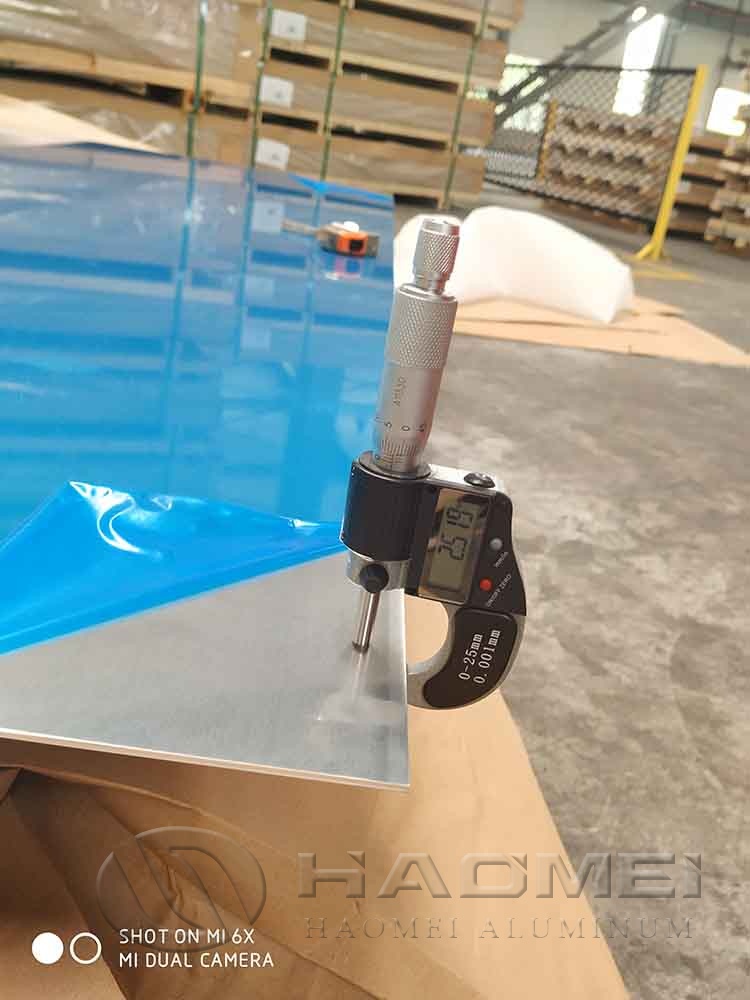
| Thickness | Measurement record or inspection report | Contract tolerance table from ordered standard |
| Surface | Visual standard and sample approval | No oil stain, black line, heavy scratch, corrosion, roll mark beyond agreement |
| Traceability | Batch number on label and documents | Label, package, and certificate must match |
| Compliance | RoHS, REACH, food-contact, or customer-specific declarations when required | Based on end-use market regulation |
For electrical or energy applications, add conductivity testing. For export to the EU, aluminum products can be affected by the Carbon Border Adjustment Mechanism under Regulation (EU) 2023/956. The transitional reporting period started in 2023, and the definitive phase begins in 2026. Importers increasingly request emissions data, production route information, and supporting records.
Thickness, Flatness, and Surface Control
Dimensional tolerance is not universal. ASTM B209/B209M, EN 485, GB/T 3880, and JIS H4000 each define their own scope and tolerance tables. Thickness tolerance depends on nominal thickness, width, and sometimes product form. This is why the ordered standard must be written on the purchase contract.
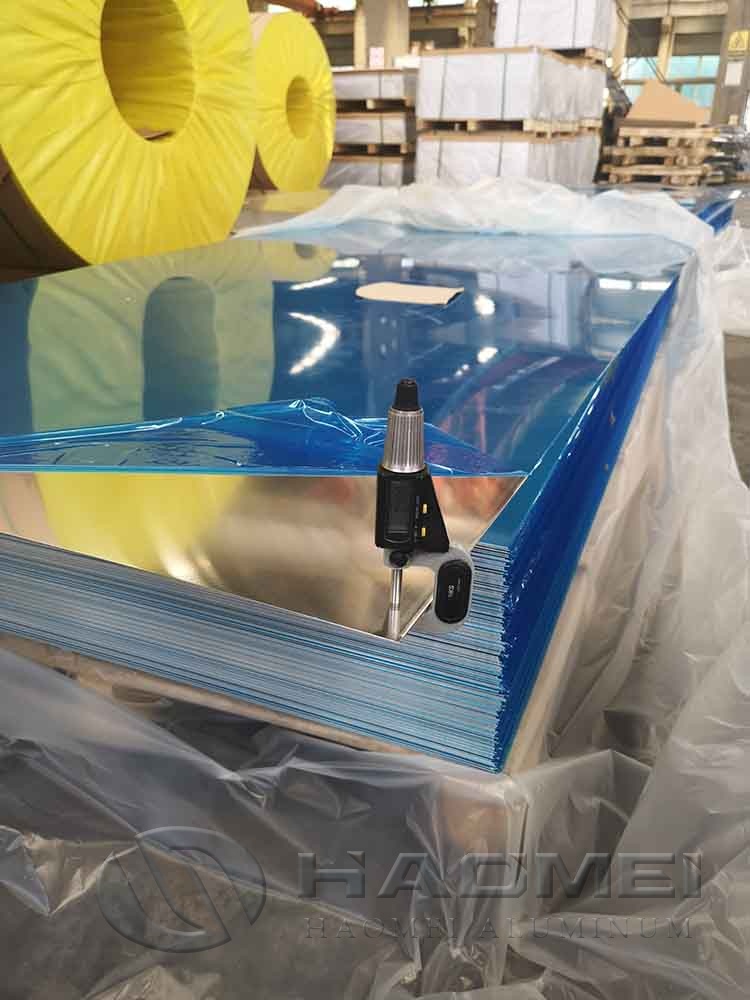
Use this inspection routine before approving mass production:
- Confirm alloy and temper from the certificate.
- Measure thickness at edge, quarter-width, and center positions.
- Check diagonal difference and flatness for cut-to-length pieces.
- Inspect both surfaces under stable lighting.
- Run a forming trial using the actual die, lubricant, and speed.
- Keep approved samples for comparison during later deliveries.
Surface finish should be described clearly. Mill finish, brushed finish, mirror finish, anodized finish, and coated finish cannot be judged by the same acceptance rule. If the part is visible after assembly, require protective film, paper interleaving, or special pallet protection.
Comparison: 1000 Series vs Other Aluminum Families
| Alloy family | Strength | Formability | Corrosion resistance | Best use |
|---|---|---|---|---|
| 1xxx | Low | Excellent | Excellent in many environments | Forming, reflectors, heat transfer, electrical parts |
| 3xxx | Medium-low | Good | Good | Roofing, cookware, tanks, general panels |
| 5xxx | Medium | Good | Very good, especially marine atmospheres | Marine parts, tank bodies, pressure-related panels |
| 6xxx | Medium-high after heat treatment | Medium | Good | Structural profiles, machined parts, automotive components |
Choose 1xxx when purity, formability, surface quality, or conductivity matters more than structural strength. Choose other families when load-bearing capacity, dent resistance, or weld strength is the dominant requirement.
Pricing Factors You Can Audit
Aluminum pricing normally reflects public metal benchmarks plus conversion costs. The London Metal Exchange and Shanghai Futures Exchange publish market references, while regional premiums, energy costs, rolling fees, thickness, width, surface treatment, packaging, and freight affect the final offer.
For accurate cost comparison, request quotations on the same basis:
| Price factor | Why it changes cost |
|---|---|
| Alloy purity | Higher purity grades may require tighter melt control |
| Thickness | Thin gauges need more rolling passes and tighter control |
| Width and length | Non-standard dimensions reduce yield |
| Temper | Annealing and work hardening route changes processing cost |
| Surface requirement | Mirror, anodized, brushed, or protected surfaces add process steps |
| Packaging | Export seaworthy pallets, moisture barrier, and interleaving increase cost |
| Incoterms | EXW, FOB, CIF, and DDP are not directly comparable |
Avoid comparing only unit price per ton. Compare delivered usable yield, rejection history, packaging integrity, certificate quality, and lead time stability.
RFQ Checklist for 1000 Series Aluminum Sheet
Send a complete RFQ to reduce quotation errors and inspection disputes:
- Alloy: 1050, 1060, 1070, 1100, or equivalent standard grade.
- Temper: O, H12, H14, H16, H18, or project-specific requirement.
- Size: thickness, width, length, tolerance standard.
- Quantity: total weight and delivery schedule by batch.
- Surface: mill finish, brushed, mirror, anodized, coated, or protected.
- Standard: ASTM B209/B209M, EN 485 and EN 573, GB/T 3880, JIS H4000, or another agreed document.
- Testing: chemistry, mechanical properties, conductivity, surface inspection, and dimensional report.
- Compliance: RoHS, REACH, CBAM-related data, food-contact declaration, or customer format.
- Packaging: pallet type, moisture protection, inner diameter if rolled material is ordered, label language, and traceability format.
- Acceptance rule: sampling method, defect limits, claim process, and document set required before shipment.
Original source: https://www.hm-alu.com/a/1000-series-aluminum-sheet.html
Tags:1000 Series Aluminum Sheet 1050 aluminum sheet 1060 aluminum sheet 1070 aluminum sheet pure aluminum sheet
Prev: Aluminum Circle Sheet
Next: 1050 Aluminum Sheet