

Applications of Aluminum Alloy 6061 in The Photovoltaic Field
The core reason 6061 aluminum alloy has secured its place in the photovoltaic field lies in its precise composition ratio and excellent overall performance. After T6 heat treatment, its tensile strength can reach over 276 MPa, and its density is only one-third that of steel, achieving a balance of "light as a feather and strong as steel."
Furthermore, the corrosion resistance of its naturally formed dense oxide film, combined with deep processing techniques such as anodizing and fluorocarbon spraying, allows it to stably serve for over 25 years in extreme outdoor environments (high temperature, high humidity, salt spray), perfectly matching the long-term usage requirements of photovoltaic power plants.
In addition, 6061 aluminum alloy is 100% recyclable, aligning with the green and low-carbon development concept of the photovoltaic industry, which is a significant advantage in replacing traditional steel.
The core difference between 6061 aluminum sheets and aluminum profiles lies in their processing form and functional positioning. Aluminum sheets, primarily in a planar, extended form, emphasize auxiliary functions such as protection and conductivity; aluminum profiles, with their three-dimensional structure, bear the core load-bearing functions of support and fixation. The two complement each other in photovoltaic systems.
6061 Aluminum Sheets
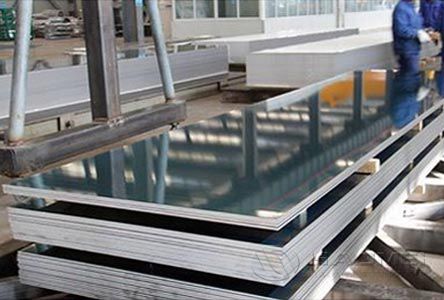
6061 aluminum sheets are planar sheets manufactured through a rolling process, typically with a thickness between 0.5-10mm. Due to their excellent ductility, conductivity, and corrosion resistance, they are mainly used for auxiliary protection and conductivity in photovoltaic systems. Their core applications are concentrated in the following two areas:
1. Photovoltaic Inverter/Combiner Box Housing Protection: Inverters and combiner boxes are the "brain" and "blood vessels" of a photovoltaic system, requiring long-term outdoor exposure and demanding extremely high protection performance. Compared to ordinary aluminum sheets, the high strength of 6061 aluminum sheets effectively prevents housing deformation and damage, ensuring the safety of internal electrical components.
2. Photovoltaic Module Backsheets and Conductive Connectors: In some high-end photovoltaic modules, 6061 aluminum sheets can serve as the core layer of the backsheet material, replacing traditional plastic or glass backsheets. This not only improves the mechanical strength of the module, preventing damage during transportation and installation, but also enhances its thermal conductivity, improving photoelectric conversion efficiency.
Furthermore, 6061 aluminum sheets can be processed into small conductive connectors. Utilizing their excellent conductivity, they facilitate current transfer between modules. Compared to copper connectors, aluminum sheets are lighter and less expensive, while also offering superior corrosion resistance, making them suitable for long-term outdoor use.
3. Photovoltaic Power Station Grounding and Lightning Protection Devices: Photovoltaic power stations require reliable grounding systems to cope with lightning strikes. 6061 aluminum sheets can be made into grounding flat steel, grounding grids, and other components. Their excellent conductivity and corrosion resistance ensure low resistance and long-term stability of the grounding system. In severely corrosive areas such as coastal regions and high-altitude areas, the corrosion resistance advantages of 6061 aluminum sheets are particularly significant, preventing grounding failures caused by corrosion in traditional steel grounding devices.
6061 Aluminum Profiles
6061 aluminum profiles are three-dimensional structural components manufactured through an extrusion process. They can be processed into various cross-sectional shapes such as C-shaped steel, round tubes, square tubes, and angle brackets, with a yield strength reaching 214MPa. They are 35% lighter than traditional steel structures and are the core material for photovoltaic (PV) systems, bearing the load and providing stability. Their main applications include:
1. Distributed PV Support Structure: Distributed PV power stations (rooftop, mountain, water surface, etc.) have complex installation environments, requiring extremely high levels of lightweight, corrosion resistance, and adaptability. 6061-T6 aluminum profiles are the preferred material.
Extruded C-shaped steel purlins, round tube columns, and diagonal braces can be assembled into a stable support system to support the weight of the PV modules and resist external forces such as wind and snow loads.
2. Core Components of Tracking PV Supports: Tracking PV supports can improve photoelectric conversion efficiency by rotating to follow the sun's angle, requiring higher strength, toughness, and precision. 6061 aluminum profiles, through topology optimization design (such as hollow cavity structures), further reduce weight while ensuring load-bearing capacity. Their processing accuracy can be controlled within 0.1mm, meeting the installation requirements of the rotating mechanism of tracking brackets.
Compared to fixed brackets, the 6061 aluminum alloy components of tracking brackets need to withstand more frequent mechanical impacts. Their excellent fatigue resistance ensures long-term stable operation of the bracket, preventing deformation and breakage.
3. Photovoltaic Bracket Connectors: In addition to the main load-bearing structure, 6061 aluminum profiles can also be processed into corner brackets, connectors, and pressure blocks. Pressure blocks made from 6061 aluminum profiles undergo precision stamping and anodizing, resulting in high fit and corrosion resistance, effectively ensuring the installation stability of the modules and adapting to various module types, including double-glass frameless modules.
Original source: https://www.hm-alu.com/a/applications-of-aluminum-alloy-6061-in-the-photovoltaic-field.html
Tags:6061 aluminum sheet
Prev: Aluminum Circle for Pop Cans
Next: 1000 Series Aluminium