

1060 Aluminum Sheet
For industrial orders, the most common problem with 1060 aluminum sheet is not alloy availability. It is receiving material that meets the stated chemistry but fails in forming, flatness, thickness consistency, or surface condition.
1060 is a commercially pure aluminum grade in the 1xxx series. The Aluminum Association designation requires a minimum aluminum content of 99.60%. It is non-heat-treatable, so its strength is primarily controlled through cold working and annealing. This makes temper selection, dimensional tolerance, and inspection records more important than a generic alloy label.
Specify the Material Beyond the Alloy Number
A purchase specification should identify the product form, temper, dimensions, applicable standard, surface requirement, and test documentation. Stating only "1060" leaves too much room for inconsistent supply.
| Specification Item | What to State | Why It Prevents Problems |
|---|---|---|
| Alloy | 1060, aluminum minimum 99.60% | Confirms the intended 1xxx-grade chemistry |
| Temper | O, H12, H14, H16, H18, or agreed condition | Controls bendability, strength, and springback |
| Thickness | Nominal thickness plus permitted tolerance | Avoids gauge variation that affects forming and weight |
| Width and length | Exact dimensions and edge condition | Reduces trimming loss and handling issues |
| Surface | Mill finish, protective film, brushed, or polished requirement | Prevents disputes over scratches, oil, and marks |
| Standard | ASTM B209 or another mutually agreed standard | Establishes test methods and tolerance tables |
| Documentation | Mill test certificate, packing list, inspection report | Supports traceability and incoming inspection |
For general industrial fabrication, ASTM B209 is a widely used reference for aluminum and aluminum-alloy sheet and plate. Its requirements vary by material thickness, width, temper, and product category. Do not use a single universal tolerance value copied from a catalog; confirm the relevant table for the ordered dimensions.
When an application needs a broader range of grades or dimensions, compare it with Aluminum Sheet Plate options before finalizing the material callout. A thicker product or a different alloy may be more suitable where rigidity, machining response, or corrosion exposure is the primary requirement.
Choose Temper According to the Manufacturing Process
Temper is the feature that most directly determines whether 1060 material will form as expected. Because this alloy is highly ductile, annealed material is often selected for deep drawing, spinning, stamping, and bending. Harder tempers improve resistance to denting but reduce forming latitude.
| Temper Condition | Relative Formability | Relative Strength | Typical Use Considerations |
|---|---|---|---|
| O, annealed | Highest | Lowest | Deep drawing, spinning, complex bends |
| H12 / H14 | High to moderate | Moderate | General bending, panel fabrication, stamped parts |
| H16 / H18 | Lower | Higher | Flat components where stiffness and handling resistance matter |
Use this process-based checklist before confirming temper:
- Identify the smallest inside bend radius and the bend direction relative to rolling direction.
- Confirm whether the part will be drawn, spun, embossed, or simply sheared.
- Define acceptable springback after forming.
- Request trial samples when tooling is fixed or the formed profile has tight geometry.
- Record the required temper on the purchase order and mill test certificate.
A frequent issue is ordering H14 material for a deep-drawn part because it appears stronger on paper. If the part needs severe deformation, O temper generally offers more forming margin. Conversely, specifying O temper for handling-intensive panels may result in dents during transport or assembly.
Verify Thickness, Surface, and Traceability Before Release
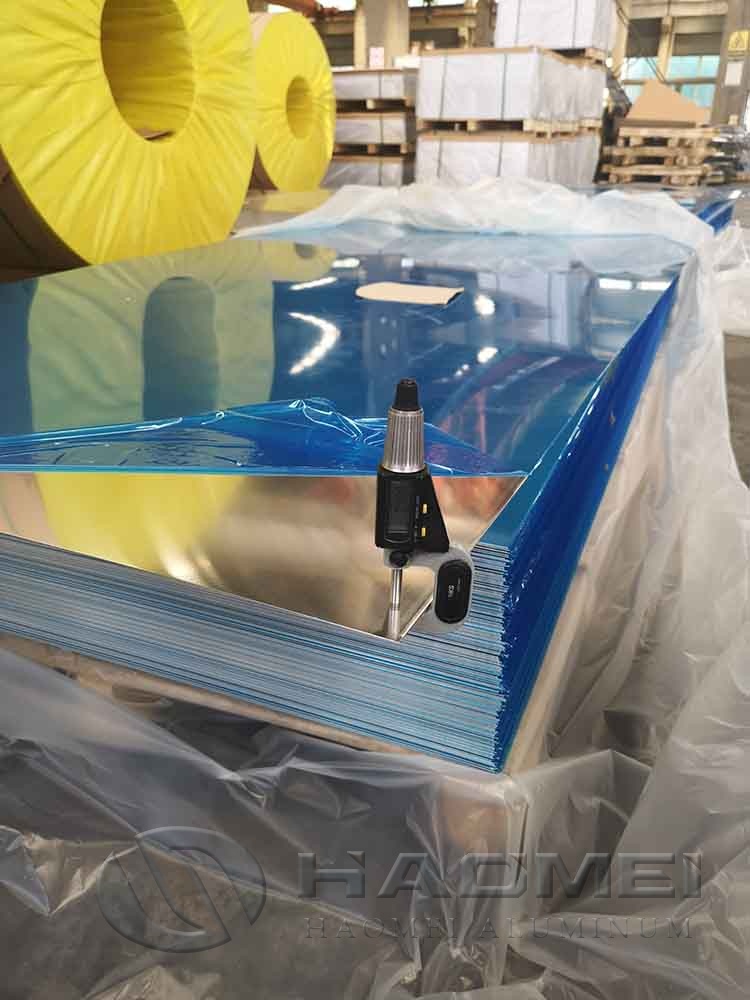
Thickness control affects cost, weight, forming behavior, electrical performance, and nesting yield. Measure at multiple points rather than one location near the edge. Edge readings can differ from readings taken across the usable width, especially after slitting or leveling.
For projects with several gauges, review the relevant Different Thickness Aluminum Sheet -- Haomei specifications alongside the fabrication drawing. The practical question is not only whether a gauge exists, but whether its tolerance supports the finished part requirement.
Incoming Inspection Checklist
| Inspection Step | Method | Acceptance Focus |
|---|---|---|
| Verify identity | Match labels, packing list, and mill test certificate | Alloy, temper, dimensions, heat or batch reference |
| Check thickness | Calibrated micrometer at defined positions | Conformance to agreed tolerance |
| Check width and length | Steel rule, tape, or calibrated measuring system | Dimensional consistency and squareness where required |
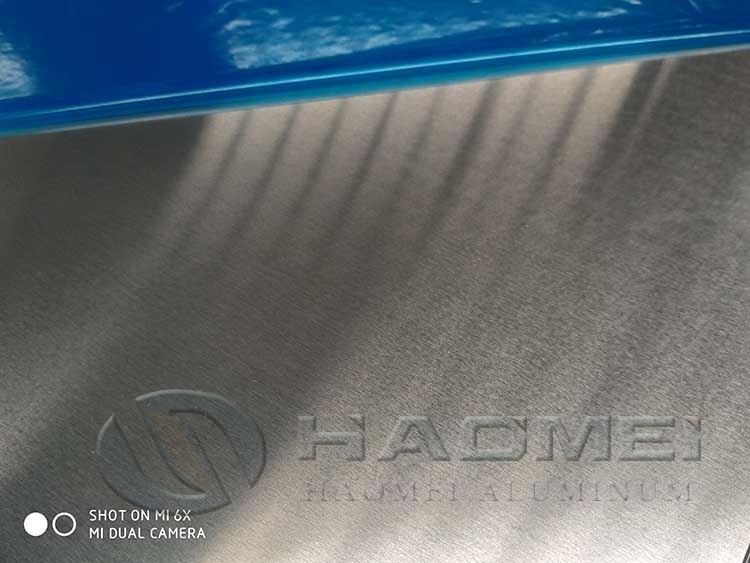
| Inspect surface | Visual examination under adequate lighting | Scratches, dents, oxidation, oil, roller marks, protective-film condition |
| Assess flatness | Flat table, straightedge, or agreed flatness method | Waves, buckles, coil set, and edge camber |
| Confirm chemistry | Review certificate; use PMI when contractually required | Aluminum minimum and controlled impurity limits |
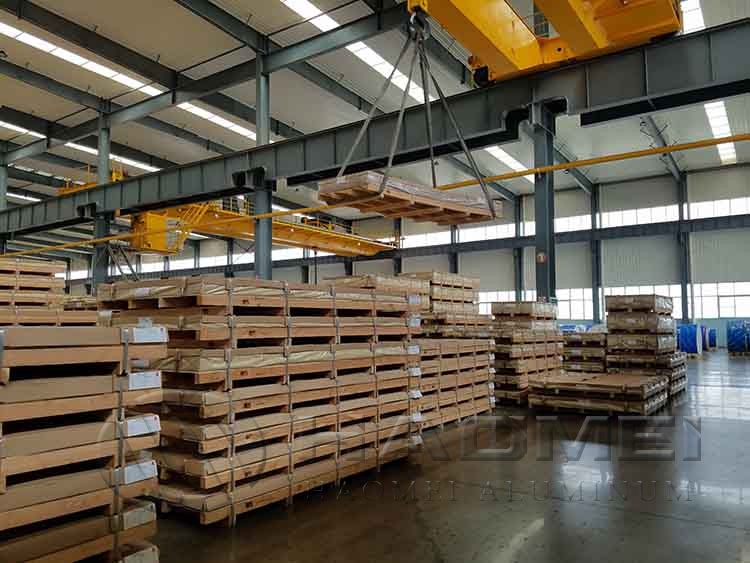
| Confirm packaging | Inspect pallets, separators, wrapping, and moisture protection | Prevention of transit damage and water staining |
Surface expectations should be written in functional terms. For example, "no defects visible at 1 meter under normal indoor lighting on the exposed face" is more measurable than "high-quality surface." If protective film is required, state film type, adhesion range, exposure side, and whether residue-free removal is required after processing.
Traceability is also becoming commercially significant. Aluminum is within the scope of the EU Carbon Border Adjustment Mechanism. The European Commission states that the definitive CBAM regime started on January 1, 2026. Importers serving affected EU routes should request origin, production-route, and embedded-emissions documentation early, rather than attempting to reconstruct records after shipment.
Release material only after the certificate, dimensional checks, surface inspection, temper verification, and packaging condition match the approved specification. This approach turns 1060 aluminum from a generic commodity description into a controlled input for repeatable fabrication.
Original source: https://www.hm-alu.com/a/1060-aluminum-sheet.html
Tags:1060 Aluminum Sheet 1060 Aluminum Alloy Aluminum Sheet Tolerance 1060 Aluminum Temper
Prev: 1050 Aluminum