


Aluminum Strip Thickness and Width Tolerance Guide
In industries such as new energy, hardware stamping, packaging, electronics/appliances, and automotive parts, the dimensional tolerances of aluminum strips directly determine product forming accuracy, assembly fit, and yield rates. Poor tolerance control can easily lead to issues such as cracking during stamping, excessive joint gaps, equipment jams, and deviations in finished product dimensions.
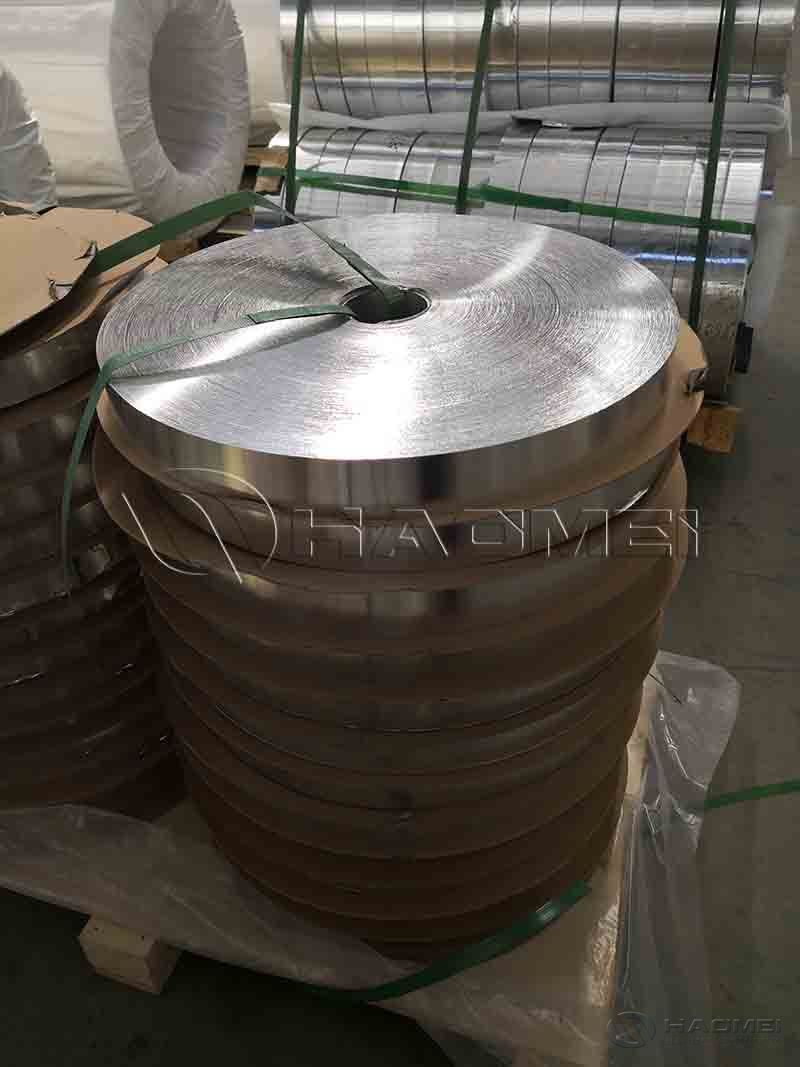
The aluminum strip manufacturers China have fully implemented standardized, precision-oriented production. Leveraging mature rolling processes and quality control systems, they offer tiered supply options—ranging from standard-grade to high-precision tolerances—balancing quality with cost-effectiveness.
Domestic Aluminum Strip Tolerances
Domestic aluminum strip tolerances are primarily categorized into two grades, which serve as the standard supply classifications for manufacturers:
- Standard-Grade Tolerance: Based on general industrial standards, this grade is suitable for applications requiring lower precision, such as general stamping, thermal insulation, decoration, and standard sheet metal work. It represents the most widely circulated and cost-effective specification on the market.
- High-Precision Tolerance: Based on high-precision custom standards with significantly tighter deviation ranges, this grade is suitable for demanding applications such as electronic components, precision stamping, new energy battery tabs, precision automotive parts, and medical device components. Production requires specialized machine calibration and batch-by-batch inspection.
Aluminum Strip Thickness Tolerances
- Thickness 0.20–1.20 mm: standard-grade tolerance is ±0.04 to ±0.10 mm; high-precision tolerance can be tightened to within ±0.03 mm. These ultra-thin strips offer excellent flatness and thickness uniformity, making them suitable for producing electronic foils and precision gaskets.
- Thickness 1.20–3.00 mm: Standard-grade tolerance is ±0.10 to ±0.15 mm; high-precision tolerance is ±0.05 to ±0.09 mm. Widely used in hardware stamping, kitchenware accessories, and lighting components.
- Thickness 3.00–7.00 mm: Standard-grade tolerance is ±0.15 to ±0.32 mm; high-precision tolerance is significantly tighter, offering the stability required for industrial structural components and mold accessories.
Aluminum Strip Width Tolerances
1. Cold-rolled slit aluminum strips (mainstream industrial use)
For standard slit aluminum strips with widths ≤1250mm, width tolerances are controlled at ±0.5 to ±1.0mm (standard grade), meeting requirements for general automated feeding and continuous stamping.
High-precision custom strips feature tolerances tightened to ±0.1 to ±0.3mm; they are burr-free and uniform in width, making them suitable for high-speed precision stamping lines.
2. Hot-rolled wide aluminum strips
For wide hot-rolled aluminum strips exceeding 1250mm in width, there are no specific national standard grade requirements; standard tolerances range from ±1.0 to ±2.0mm. These are primarily used for large-scale equipment cladding, industrial facility insulation, and large sheet metal fabrication, where width precision requirements are less stringent.
Henan Province is a major hub for the aluminum strip industry, offering high consistency in slitting precision. It supports small-batch, multi-specification customization of high-precision widths, with delivery efficiency far surpassing that of overseas manufacturers.
International Market Tolerance Grades and Export Pricing
- ISO Standard (General Grade) (for Southeast Asia & Middle East): 1060/3003 standard aluminum strips; wholesale price aluminum strip is priced 3–5% higher than domestic standard grades, offering a cost-performance ratio far superior to local production capacity.
- EN Standard (Precision Grade) (for European Market): Meets strict European tolerance standards; requires high-precision domestic base materials and precision slitting processes; priced 8–12% higher.
- ASTM Standard (Stable Grade) (for North American Market): Features strict control over batch-to-batch tolerance fluctuations and comprehensive dimensional inspection; priced 10–15% higher, offering significant advantages for high-end alloy aluminum strip exports.
A Guide to Avoiding Pitfalls in International Trade Procurement
1. For export orders, always lock in acceptance criteria in advance and clearly specify the corresponding ISO, EN, or ASTM grades to prevent returns caused by discrepancies between national standards and international standards.
2. For high-end orders destined for Europe or the US, the use of standard domestic-grade aluminum coil is prohibited; manufacturers must supply batches produced to international precision specifications that meet requirements for unidirectional tolerances and full-dimensional inspection.
3. At the time of contracting, require the manufacturer to provide tolerance inspection reports in both Chinese and English that list parameters aligned with international standards, ensuring a smooth overseas inspection process.
4. For orders targeting emerging markets, products aligned with general ISO grades may be selected to balance quality and cost, thereby maximizing the competitiveness of your export quotations.
Original source: https://www.hm-alu.com/a/aluminum-strip-thickness-and-width-tolerance-guide.html
Prev: Aluminium Foil for Cooking
Next: 3105 VS 3003 Aluminum