

Aluminum Sheet Circle
For cookware, lighting, pressure vessels, and spun components, the highest-cost issue is often not the metal price. It is forming scrap caused by cracking, earing, wrinkling, or burr-related tool damage. A properly specified aluminum sheet circle helps reduce these defects before press production begins.
The most important product feature for deep drawing is stable formability, which depends on alloy, temper, thickness consistency, grain structure, surface condition, and cut-edge quality. Diameter alone is not enough for a usable round blank.
1. Match Alloy and Temper to the Forming Operation
Aluminum circles are commonly produced from non-heat-treatable wrought alloys. For drawn cookware and general stamping, 1xxx and 3xxx series materials are frequently considered because they offer useful ductility and corrosion resistance.
| Application | Common Alloy Families | Typical Temper Direction | Main Requirement |
|---|---|---|---|
| Deep-drawn cookware | 1050, 1060, 1070 | O temper | High elongation and low cracking risk |
| Cookware with higher strength needs | 3003 | O temper | Better strength than 1xxx with workable formability |
| Lighting reflectors | 1050, 1060, 1100 | H14 or application-specific | Surface consistency and controlled forming |
| Spinning and shallow forming | 1050, 1060, 3003 | O, H12, H14 | Stable thickness and smooth edges |
For deep drawing, O temper is generally selected when maximum ductility is needed. A harder temper can improve handling stiffness, but it may increase the likelihood of splits in high draw-ratio parts.
Ask the mill or converter to identify the applicable standard on the quotation and certificate. ASTM B209 covers aluminum and aluminum-alloy sheet and plate, while EN 485-2 specifies mechanical-property requirements for wrought aluminum sheet, strip, and plate. If circles are cut from parent material, the agreed blank tolerances should be stated separately because final diameter and edge condition are process-dependent.
A suitable Aluminum Sheet Circle specification should state the intended process, such as deep drawing, spinning, stamping, or anodizing. This prevents a general-purpose blank from being supplied for a demanding forming operation.
2. Control Flatness, Thickness, and Burr Before Pressing
A round blank can look acceptable in a stack yet create repeated press failures. Thickness variation changes material flow. Excessive burrs can scratch tooling, interfere with stacking, and initiate cracks at the blank edge.
Use this acceptance checklist in purchase documentation:
| Control Point | What to Specify | Why It Matters |
|---|---|---|
| Diameter | Nominal diameter and permitted tolerance | Supports repeatable tool clearance and draw results |
| Thickness | Nominal thickness and tolerance range | Reduces uneven wall thickness after drawing |
| Temper | Alloy and temper, such as 1050-O or 3003-O | Defines expected forming response |
| Flatness | Maximum allowable wave, buckle, or dish condition | Helps automatic feeding and blank seating |
| Edge condition | Deburred, no sharp edge, maximum burr height if required | Protects dies and improves safe handling |
| Surface | Mill finish, oiled or dry, scratch and stain limits | Supports coating, polishing, and appearance needs |
| Grain direction | State if earing performance is critical | Helps control rim variation after drawing |
Thickness should be verified with calibrated micrometers at multiple points around the blank, not only at its center. Diameter can be checked with a suitable caliper, optical system, or go/no-go gauge depending on the tolerance requirement.
For high-volume drawn products, request first-article samples from the production blanking route. Test them with the actual die set, lubricant, and draw depth. Material performance in a laboratory tensile test does not always predict behavior in a specific press tool.
3. Prevent Earing and Cracking With a Practical Qualification Plan
Earing is the wavy rim that appears after drawing. It is linked to planar anisotropy in rolled material, meaning the metal deforms differently at different directions relative to the rolling direction. Severe earing increases trimming loss and can make rim-height control difficult.
Before approving production material, use a staged qualification plan:
Define the finished part dimensions, draw depth, wall-thickness target, and allowed trimming loss.
Select an alloy-temper combination based on the forming severity, not only the lowest starting price.
Obtain samples from the same production route proposed for regular supply.
Conduct trial draws with production tooling and the planned lubricant.
Record crack location, rim height variation, surface scratches, and wall thinning.
Agree on lot traceability and retain samples for comparison if future variation occurs.
For cookware intended to contact food, do not assume that a generic alloy statement is sufficient. Food-contact obligations vary by sales region and by the full finished article, including coatings, pigments, adhesives, and cleaning instructions. Request material traceability and any relevant declarations needed for the destination market. In the United States, food-contact requirements are administered by the U.S. Food and Drug Administration; in the European Union, framework requirements include Regulation (EC) No 1935/2004.
Price comparisons should separate the metal reference from conversion costs. A transparent quotation often uses an aluminum market reference, such as the London Metal Exchange cash price, plus an agreed premium, rolling conversion, blanking charge, packaging, and freight. Comparing only price per kilogram can hide differences in thickness tolerance, inspection level, and usable yield.
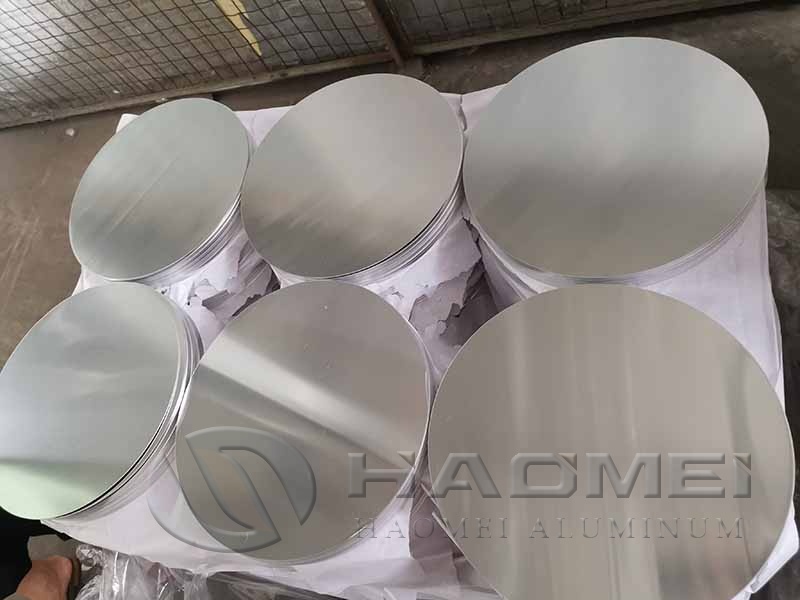
For programs requiring consistent cookware blanks, Aluminum Circles should be ordered with documented alloy, temper, dimensional tolerances, edge requirements, packing method, and inspection records. This turns forming quality from an assumption into a measurable supply requirement.
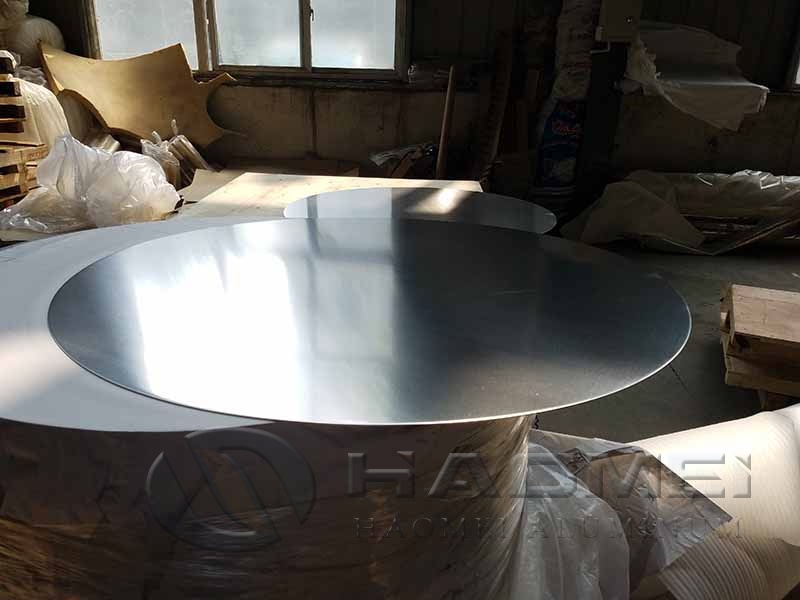
A complete request should include: alloy and temper, diameter, thickness, tolerance limits, application, forming method, surface expectation, burr limit, packaging quantity, destination, and required certificates. These details allow suppliers to assess whether the proposed blank is suitable for the actual production process rather than merely meeting a nominal size.
Original source: https://www.hm-alu.com/a/aluminum-sheet-circle.html
Tags:aluminum sheet circle deep drawing aluminum circle
Prev: Aluminum Discs For Sale