

Aluminum Ceiling Strips
For architectural ceilings, coating durability is usually the highest-risk requirement. A strip may look acceptable when delivered but develop color variation, chalking, edge corrosion, or coating cracks after forming if the alloy-temper-coating combination is not specified correctly.
Aluminum ceiling strips are normally roll-formed or press-formed from prepainted aluminum coil. They can be supplied as flat stock for local profiling, or as finished linear ceiling panels with folded edges, perforations, and suspension-system interfaces. The purchasing specification must control the substrate, paint system, geometry, and inspection method together.
1. Define the Material and Performance Requirements
Start with the installation environment. Interior dry areas, kitchens, swimming pools, transport hubs, and coastal buildings require different corrosion and coating performance levels. Do not select only by nominal thickness or paint color.
Common substrate options
| Alloy and temper | Typical application | Strength and forming behavior | Procurement note |
|---|---|---|---|
| AA 3003 H24 | Standard interior linear ceilings | Good formability with moderate strength | Widely used where corrosion exposure is limited |
| AA 3105 H24 | Prepainted architectural products | Good forming and coating compatibility | Common choice for coated ceiling profiles |
| AA 5052 H32 | Humid or more corrosive environments | Higher strength and better corrosion resistance | Confirm forming radius and coating compatibility before production |
| AA 1100 / 1070 | Decorative parts requiring high formability | Very soft, easy to form | Usually not the first choice where panel stiffness is critical |
For North American projects, ASTM B209 is commonly referenced for aluminum and aluminum-alloy flat-rolled product requirements. EN 573 identifies chemical composition and alloy designation, while EN 485 covers mechanical properties and tolerances for wrought aluminum products. These standards define the base material; they do not replace project-specific requirements for coating, panel geometry, or the installed ceiling system.
Typical decorative ceiling material thickness is often 0.45 mm to 0.70 mm, but this is not a universal design rule. Wider panels, longer spans, perforation patterns, heavy luminaires, and higher air pressure can require a thicker substrate or closer suspension spacing. Require the fabricator to confirm deflection performance for the actual panel width and support layout.
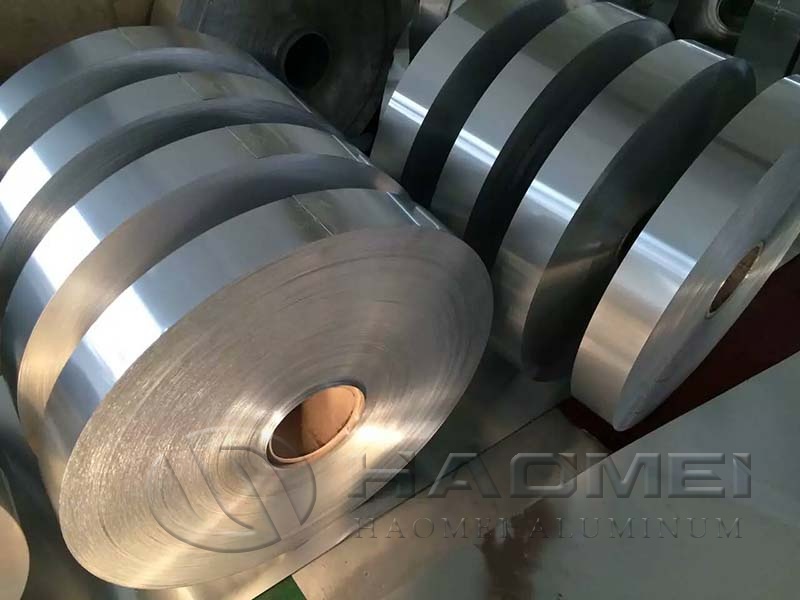
Use 1070 Aluminum Strips when the material will be locally roll-formed, and specify delivered coil width, inside diameter, outside diameter, maximum coil mass, and edge condition. These details directly affect feeding stability and scrap rates.
Coating choice: match exposure, not appearance alone
| Coating system | Practical use | Typical concern to specify |
|---|---|---|
| Polyester, PE | Dry interior ceilings | Film thickness, gloss, color consistency, forming adhesion |
| High-durability polyester | Commercial interiors and semi-exposed areas | UV performance and humidity resistance |
| PVDF fluoropolymer | Exterior soffits or high-UV exposure | Color retention, chalk resistance, approved formulation |
| Powder coating after forming | Complex profiles or small production runs | Edge coverage, cure verification, thickness uniformity |
For factory-painted material, specify dry-film thickness rather than simply stating "painted." Coating thickness can be measured using ISO 2360 for non-conductive coatings on non-magnetic conductive substrates such as aluminum. Define the required nominal thickness, minimum local thickness, color, gloss range, and visible-surface acceptance criteria in the purchase order.
2. Build a Verifiable Test and Acceptance Plan
A coating claim is meaningful only when the test method, test condition, and acceptance limit are stated. EN 13523 is the principal European test-series reference for coil-coated metals. Common methods include EN 13523-1 for film thickness, EN 13523-2 for gloss, EN 13523-3 for color difference, and EN 13523-8 for salt-spray resistance.
| Property | Recommended reference | What to record on inspection report |
|---|---|---|
| Base-metal chemistry | EN 573 or ASTM B209 contractual requirements | Alloy designation and heat/coil traceability |
| Thickness and width | EN 485 or agreed drawing tolerance | Measured values at defined locations |
| Coating thickness | ISO 2360 or EN 13523-1 | Individual readings, average, minimum result |
| Gloss | ISO 2813 or EN 13523-2 | Geometry used, usually 60 degrees unless specified otherwise |
| Color variation | EN 13523-3 | Instrument, illuminant, viewing geometry, Delta E result |
| Adhesion after forming | EN 13523-6 or agreed bend test | Bend radius, tape result, cracking or delamination |
| Humidity resistance | ISO 6270 series | Test duration, temperature, defects observed |
| Fire classification | EN 13501-1 or ASTM E84 where applicable | Tested system report, not only metal substrate data |
Salt-spray testing under ISO 9227 or EN 13523-8 is useful for comparing coated samples under controlled laboratory conditions. It is not a direct prediction of outdoor service life. For coastal or industrial locations, request evidence based on the specified coating system, pretreatment, cut-edge protection, and anticipated exposure category.
For ceiling projects, fire performance must be assessed at system level. The aluminum substrate itself is non-combustible, but coatings, acoustic fleece, insulation, clips, and backing materials can affect the final classification. Request the report for the same or demonstrably equivalent installed assembly.
3. Purchase Specification and Receiving Checklist
Avoid fixed unit-price comparisons without matching alloy, thickness, coating type, width, and processing scope. A transparent commercial structure separates the aluminum reference price, conversion charge, coating surcharge, slitting or profiling charge, packing, and freight. This makes quotations comparable when metal-market prices move.
Where paint finish and formability are both important, request production samples made from the quoted coil. The sample should include bends, folded panel edges, perforated areas if applicable, and the final visible face. Surface defects often become more apparent after roll forming than on a flat coil.
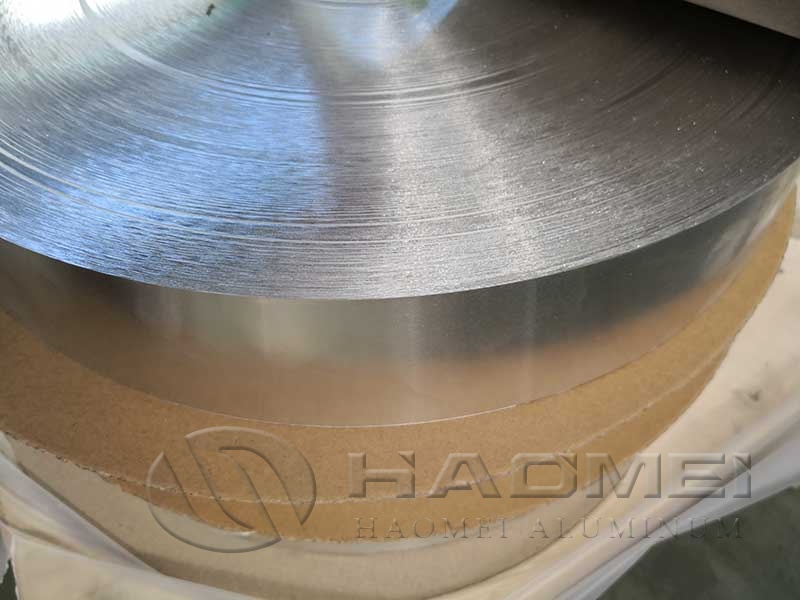
Use Aluminium Strips specifications that identify whether the material is bare, pretreated, prepainted, slit, or delivered as finished ceiling panels. These are different supply conditions with different acceptance points.
Purchase order checklist
Identify alloy, temper, nominal thickness, width, thickness tolerance, width tolerance, and edge condition.
State coil direction and paint-face orientation for roll forming.
Define coating type, color standard, gloss level, nominal and minimum dry-film thickness.
Require a mill test certificate and coating inspection report linked to each coil number.
Specify allowable surface defects on the visible face, including scratches, dents, roller marks, stains, and color variation.
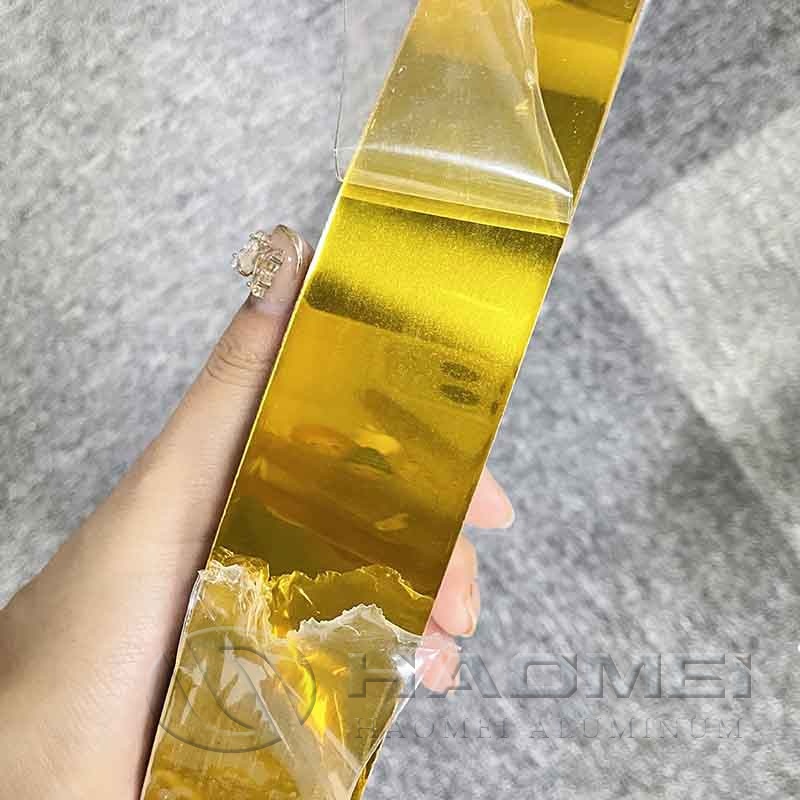
Confirm protective-film type, adhesion level, removal window, and whether film is permitted on perforated panels.
State packaging requirements: moisture barrier, edge protection, pallet design, maximum coil mass, and container loading method.
Require inspection before dispatch for dimensions, coating appearance, coil telescoping, edge damage, and traceability labels.
For finished panels, verify panel length, squareness, straightness, folded-edge geometry, perforation pattern, and compatibility with carriers and clips.
Retain approved color and formed-panel samples as the visual acceptance reference for the production run.
Original source: https://www.hm-alu.com/a/aluminum-ceiling-strips.html
Tags:Aluminum Ceiling Strips Coated Aluminum Strip Aluminum Ceiling System
Prev: 3105 VS 3003 Aluminum