

Aluminium Circle Price
Aluminium Circle Price: 5 Current Questions New Importers Ask
Recent English Q&A searches around aluminium circle price are very practical. People are not only asking for a number; they want to know why two quotations for the same diameter can look very different. The wording below reflects common questions seen on search and Q&A platforms during recent months, with fresh answers written for companies comparing aluminum discs for cookware, lighting, signage, utensils, and deep-drawing parts.
1. What is the current aluminium circle price per kg or per piece?
Most export offers are calculated per metric ton or per kg, while small trial orders are often discussed per piece. A per-piece price is not just the metal value. It usually includes raw aluminum cost, casting or rolling cost, blanking loss, annealing, surface cleaning, packing, and factory margin.
A practical formula is:
Estimated piece cost = unit metal price x piece weight + processing cost + packing and logistics share
The weight depends on diameter, thickness, and alloy density. Aluminum density is commonly estimated at 2.7 g/cm3. For example, a 300 mm x 2.0 mm circle is far heavier than a 150 mm x 1.0 mm circle, even if both look simple in photos.
| Example size | Approx. weight per piece | Why the price changes |
|---|---|---|
| 150 mm x 1.0 mm | 0.048 kg | Lower metal use, but small-size handling may add labor cost. |
| 260 mm x 1.5 mm | 0.215 kg | Common cookware size, usually easier to schedule in production. |
| 300 mm x 2.0 mm | 0.382 kg | Higher metal value and stronger packing requirements. |
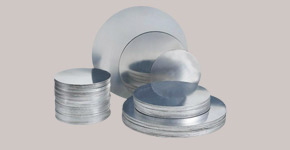
For routine cookware blanks, many purchasers ask suppliers to quote both kg price and piece price. This makes it easier to compare offers when thickness tolerance or packing style is different. If you are evaluating standard pan blanks, the product category Aluminum Circle usually covers the most common commercial specifications.
2. Why do 1050, 1060, 3003, and 5052 aluminium circles have different prices?
Alloy is one of the main reasons a quotation changes. 1050 and 1060 are high-purity commercial aluminum grades. They are widely used for spinning, cookware, reflector parts, and general deep-drawing applications. They are often more economical than alloyed grades when strength is not the primary requirement.
3003 contains manganese, giving better strength than 1050 or 1060 while keeping good formability. It is popular for cookware that needs more durability. 5052 contains magnesium and offers stronger corrosion resistance, but it is normally more expensive and may not be necessary for ordinary pots or lids.
| Alloy | Typical use | Price tendency | Comment |
|---|---|---|---|
| 1050 | Utensils, lamp covers, spinning parts | Usually economical | Good formability and high aluminum purity. |
| 1060 | Cookware blanks, reflectors, containers | Usually economical | Similar to 1050, often requested for smooth drawing. |
| 3003 | Better cookware, pressure-related parts | Medium | Stronger than 1xxx series and still workable. |
| 5052 | Marine, corrosion-resistant components | Higher | Better corrosion resistance, not always needed for pans. |
A low price for 3003 may not be better than a fair price for 1060 if the application only needs soft drawing performance. The correct comparison starts with the final product, not the alloy name alone.
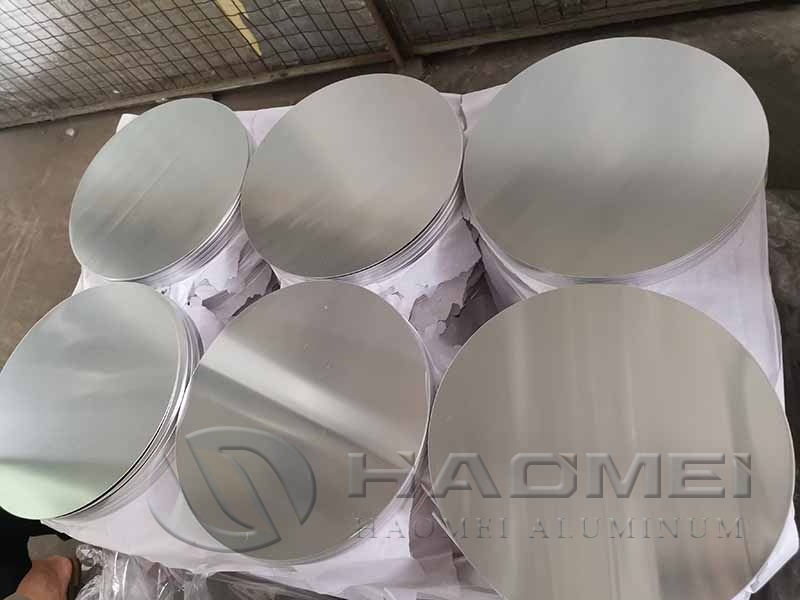
3. Is the cheapest aluminium circle price safe for cookware production?
A very low offer deserves careful checking. Cookware manufacturers usually care about surface quality, elongation, hardness, burr control, oil level, and food-contact suitability. A cheap blank with scratches, edge cracks, or unstable temper can create higher rejection cost during stamping, spinning, polishing, or anodizing.
For cookware, many factories request O temper or soft temper because it supports deep drawing. If the blank is too hard, the pan body may crack at the wall or bottom corner. If the surface has embedded marks, the defect may remain visible after polishing or coating.
Before accepting the lowest aluminium circle price, ask for these details:
| Item to confirm | Why it matters for cookware |
|---|---|
| Alloy and temper | Affects drawing depth, crack risk, and final strength. |
| Thickness tolerance | Influences pan weight, heat distribution, and cost. |
| Surface condition | Scratches and stains can cause visible defects after finishing. |
| Edge burr level | Heavy burrs may damage dies or require extra deburring. |
| Test sample | A small trial can reveal forming issues before mass production. |
For frying pans, stock pots, kettles, and pressure cooker parts, product pages for Aluminum Circles often describe typical sizes and application ranges that help purchasers prepare a clearer inquiry.
4. How do MOQ, thickness tolerance, and diameter tolerance affect aluminium circle price?
MOQ matters because circle production involves setup time, tooling, machine adjustment, inspection, and packaging. A small order may use the same preparation work as a larger order, so the unit processing cost becomes higher.
Tolerance also affects cost. A relaxed tolerance is easier to produce and inspect. A tight tolerance may require better raw material control, sharper tooling, slower blanking speed, and more inspection. For example, a request for 300 mm diameter with very strict roundness and minimal burr may cost more than a general commercial blank.
Common tolerance-related price factors include:
| Requirement | Possible price effect | Practical suggestion |
|---|---|---|
| Very tight thickness tolerance | Higher | Use only when the final product truly needs it. |
| Very tight diameter tolerance | Higher | Share drawing or final part use with the supplier. |
| Burr-free edge | Higher | Specify acceptable burr height instead of using vague wording. |
| Special surface protection | Higher | PE film, paper interleaving, or oil control adds cost. |
| Mixed sizes in one order | Higher | Fewer sizes per order often improves production efficiency. |
If the application is simple cookware, a commercial tolerance may be enough. If the circle will be used for precision stamping, the added cost of tighter tolerance may be worthwhile because it can reduce waste later.
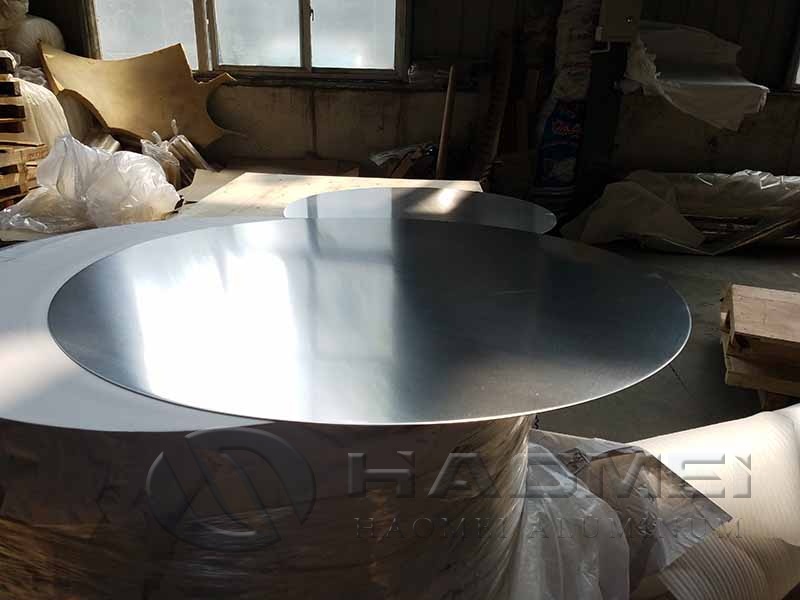
5. Why is my landed aluminium circle price higher than the supplier quotation?
Many new importers compare only the factory quotation, then feel surprised when the landed cost is higher. The factory price may be quoted as EXW, FOB, CFR, or CIF. Each trade term includes different responsibilities.
EXW means the price is mainly the factory-side product cost. FOB includes delivery to the port and export handling. CIF includes ocean freight and insurance to the destination port, but it may still exclude import duty, destination port charges, customs clearance, inland delivery, and local taxes.
| Cost item | Often forgotten? | Notes |
|---|---|---|
| Wooden pallet or case | Yes | Strong export packing protects edges and surface. |
| Ocean freight | Sometimes | Changes with route, season, and container availability. |
| Import duty | Yes | Depends on HS code and destination country rules. |
| Port and customs charges | Yes | Local charges can be significant for small shipments. |
| Inland delivery | Yes | Heavy metal cargo may need forklift handling. |
| Bank fee or payment charge | Sometimes | Small orders are more sensitive to fixed fees. |
To compare quotations fairly, request the same trade term, same alloy, same temper, same thickness tolerance, same packing method, and same order quantity. A slightly higher factory quotation may become more economical if packing is stronger, tolerance is realistic, and rejection risk is lower.
A clear inquiry can be short: alloy, temper, diameter, thickness, quantity, usage, surface requirement, tolerance, packing, destination port, and preferred trade term. With those details, suppliers can quote a realistic aluminium circle price instead of a rough estimate that changes later.
Original source: https://www.hm-alu.com/a/aluminium-circle-price.html
Tags:aluminium circle price aluminum circle cost aluminium discs price cookware aluminum circle
Prev: Aluminium Circle Factory
Next: Aluminium Disc Price