

5052 Aluminum Coil Wholesale
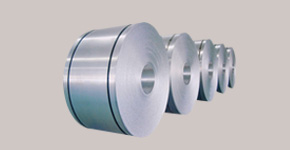
5052 aluminum coil is widely specified where corrosion resistance, moderate strength and reliable forming are required. Its principal alloying element is magnesium, which gives better resistance to humid, marine and many industrial atmospheres than 3xxx-series general-purpose material.
The top concern is usually temper consistency. A coil that meets nominal alloy chemistry but varies in hardness, yield strength or thickness can crack during bending, create unstable press settings and increase coating or forming rejects. A purchase order should therefore control temper, mechanical properties, dimensional tolerances and inspection evidence, not only alloy designation and weight.
Set a Purchase Specification That Can Be Verified
For unpainted mill-finish material, ASTM B209/B209M is a commonly used specification for aluminum and aluminum-alloy sheet and plate. For European orders, EN 485-1 defines technical conditions for inspection and delivery, while EN 485-2 covers mechanical-property limits. State the applicable standard and edition in the order, because limits and terminology can differ by market.
5052 composition is controlled by the applicable material standard. Under ASTM B209/B209M chemistry requirements, 5052 contains 2.2% to 2.8% magnesium and 0.15% to 0.35% chromium, with aluminum as the balance. These elements support its corrosion behavior and work-hardening response.
Use this line-item checklist in the inquiry:
| Order item | What to state | Why it matters |
|---|---|---|
| Alloy and standard | 5052, ASTM B209/B209M or EN 485 | Prevents substitution with a similar-looking grade. |
| Temper | O, H32, H34, H38, or customer-approved equivalent | Governs forming behavior and strength. |
| Dimensions | Thickness, width, thickness tolerance, width tolerance | Controls yield and downstream machine fit. |
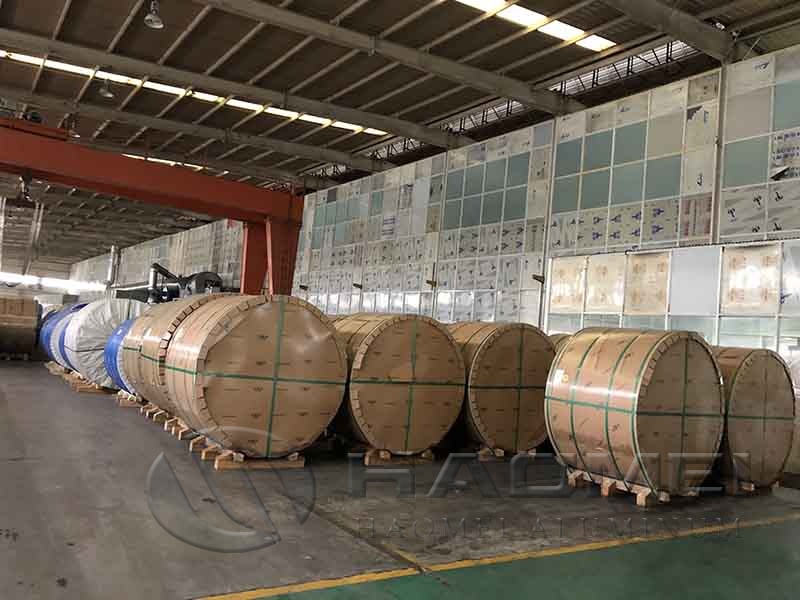
| Coil configuration | Inside diameter, outside diameter, maximum coil mass, winding direction | Prevents decoiler and handling incompatibility. |
| Surface | Mill finish, protective film, oiled or dry, allowable defects | Avoids disputes over scratches, stains and roll marks. |
| Documentation | Mill test certificate, coil identification, test standard | Creates lot-level traceability. |
| Packaging | Export seaworthy pack, moisture barrier, edge protection, pallet/skid requirement | Reduces transit corrosion and edge damage. |
For applications requiring painted stock, specify the alloy and temper beneath the coating. Paint does not correct an unsuitable substrate. When color, gloss and exterior durability are needed, PE PVDF Color Coated Aluminum Coils should be specified with coating thickness, color standard, film protection and adhesion test method.
Select Temper and Grade for the Actual Forming Risk
5052 is non-heat-treatable. Its strength increases through strain hardening rather than solution heat treatment and aging. The temper selection must match the tightest bend, draw depth and final stiffness requirement.
| Temper | Practical use | Forming risk | Specification note |
|---|---|---|---|
| O | Deep drawing, complex forming, tight radii | Lowest cracking risk | Confirm handling protection because the surface can mark more easily. |
| H32 | General fabrication, panels, housings, moderate bends | Low to moderate | Common balance of formability and strength. |
| H34 | Stiffer formed parts, shallower bends | Moderate | Verify minimum bend radius with the actual tooling. |
| H38 | High stiffness where forming is limited | Higher | Use trial blanks before production release. |
Do not specify H32 merely because it is common. For example, a severe drawn enclosure generally needs O temper, while a flat corrosion-resistant cover may benefit from H34. Request mechanical-property results from the actual production coils, particularly tensile strength, yield strength and elongation. ASTM B209/B209M lists mechanical-property requirements by alloy, temper and thickness range; values must be checked against the ordered thickness, not copied from a generic data sheet.
The following comparison helps avoid grade selection errors:
| Alloy | Relative corrosion resistance | Formability | Strength approach | Typical reason to select |
|---|---|---|---|---|
| 3003 | Good | Good | Manganese alloy, moderate strength | Economical general forming where corrosion demand is moderate. |
| 5052 | Very good in many wet and marine atmospheres | Good, especially O/H32 | Magnesium alloy, work hardened | Fabricated parts needing corrosion resistance and moderate strength. |
| 5083 | Excellent, especially marine exposure | More limited in hard tempers | Higher-magnesium alloy | Higher-strength marine structures and welded assemblies. |
| 6061 | Good | Less suitable for deep forming | Heat treatable | Structural parts requiring higher strength after heat treatment. |
For broad width, thickness and temper options, assess Aluminum Coil availability against the required coil ID, maximum mass and surface condition before releasing an order.
Control Testing, Pricing Basis and Delivery Condition
Ask for a mill test certificate identifying coil number, alloy, temper, dimensions, chemistry and mechanical-test results. Match every coil label to the certificate at receiving. If a claim occurs, this traceability separates a mill issue from processing damage.
A practical incoming inspection plan is:
- Verify coil tag, purchase-order number, alloy, temper and net mass.
- Measure thickness across the width at the agreed frequency using calibrated equipment.
- Check width, edge condition, coil ID, OD and telescoping against stated limits.
- Inspect outer wraps and several inner wraps for water staining, corrosion, dents, oil excess, scratches and edge cracks.
- Retain samples for bend trials when the part has a critical radius or draw depth.
- Compare certificate chemistry and mechanical values with the governing standard and ordered temper.
For forming-sensitive programs, define an acceptance bend test on representative samples. State bend direction relative to rolling direction, bend radius, sample thickness, angle and acceptance criterion. Without these details, a phrase such as "good bendability" is not measurable.
If coating is required, add separate performance tests. ASTM D3359 is widely used for tape adhesion of coatings, and ASTM B117 is a laboratory salt-spray exposure method. Neither result alone predicts field life. Exterior exposure also depends on coating system, pretreatment, cut-edge design, drainage, retained contaminants and UV conditions.
Pricing should be comparable on the same basis. Request quotations showing metal basis, conversion charge, coating charge where applicable, currency, Incoterm, net mass versus gross mass, packaging, inspection, tolerance basis and validity period. Aluminum metal references may be tied to a recognized exchange quotation, but the quotation must clearly state the pricing date or averaging period. A low unit price can be offset by thinner actual gauge, wider tolerance, lower coil yield or inadequate export packaging.
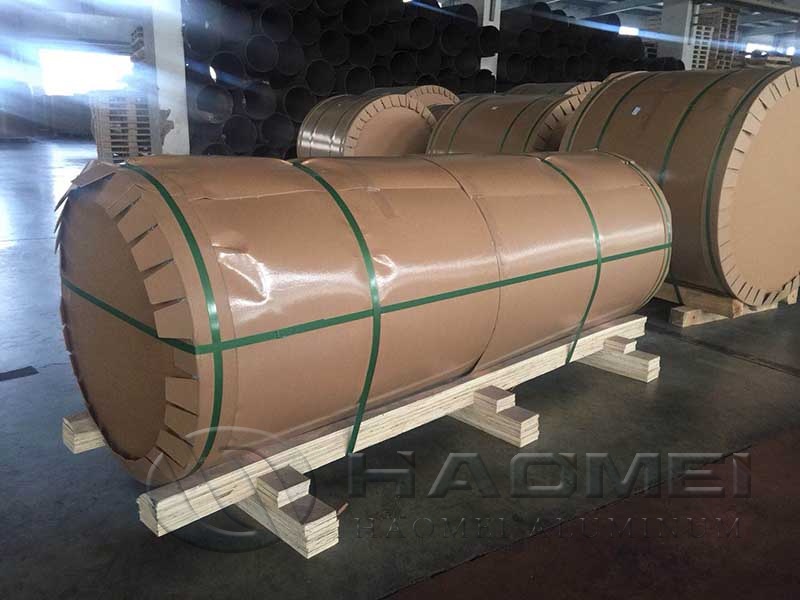
Before shipment, require dry, wrapped coils with protected edges and moisture-resistant packaging. For sea transport, avoid direct contact between aluminum and water-retaining packaging materials. At receipt, photograph damaged packaging before unloading or unwrapping; this preserves evidence for a carrier or supplier claim.
A controlled 5052 order names the standard, verifies the actual temper, defines measurable tolerances and keeps coil-level records. These controls protect forming performance and corrosion resistance long after the material reaches production.
Original source: https://www.hm-alu.com/a/5052-aluminum-coil-wholesale.html
Tags:5052 Aluminum Coil Aluminum Coil 5052 H32 Coil ASTM B209
Prev: Aluminum Round Disc