

Aluminium Circle For Cookware
One concern to control first: earing and cracking in deep drawing
For cookware stamping, the biggest cost driver is not the metal price, it is yield loss from earing (uneven rim height) and cracking during deep drawing and spinning. Both are strongly tied to crystallographic texture, grain size, and lubrication behavior, which are affected by alloy, temper, and process control.
If your forming line struggles with inconsistent rim height, frequent trim scrap, or pinhole cracks near the wall, prioritize material that is specified and verified for drawing performance, not only chemistry.
Material selection: alloys, tempers, and what they imply
Most stamped and spun pots use 1xxx or 3xxx series aluminum because they combine formability with thermal conductivity.
Common options
| Application | Typical alloy | Typical temper at delivery | Why it is used | Watch-outs |
|---|---|---|---|---|
| Deep drawn pots, lids | 1050A / 1060 / 1070 | O (annealed) | Highest ductility, low risk of cracks | Lower strength; dents easier |
| Spun cookware, thicker bodies | 1100 | O | Good formability, consistent surface | Control inclusions for anodizing |
| Strength-demanding cookware (hard anodized, pressure cookware parts) | 3003 | O or H14 (process-dependent) | Better strength than 1xxx, good formability | H tempers reduce drawability |
Standards to reference (select by region and contract)
Chemical composition and product forms are commonly specified using EN AW designations (EN 573 for chemical composition; EN 485 series for mechanical properties and tolerances) in Europe, and ASTM B209 in many international contracts.
If the cookware will be marketed in the EU, food contact compliance is typically managed via material declarations aligned with Regulation (EC) No 1935/2004 and Good Manufacturing Practice Regulation (EC) No 2023/2006. (These are framework requirements; supplier DoC and traceability matter.)
When requesting quotation, state intended forming method (deep drawing, spinning, impact extrusion), final thickness, and whether anodizing will be applied. Those three inputs change the preferred alloy, anneal target, and surface inspection.
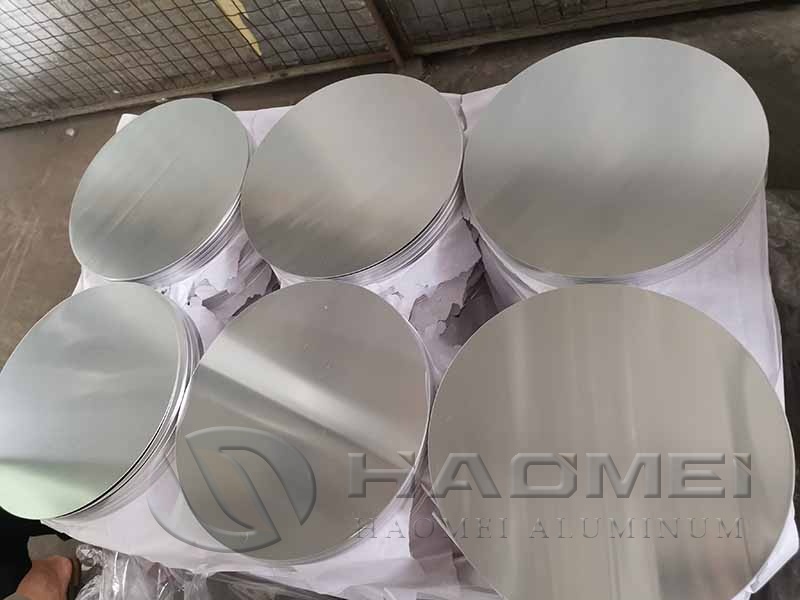
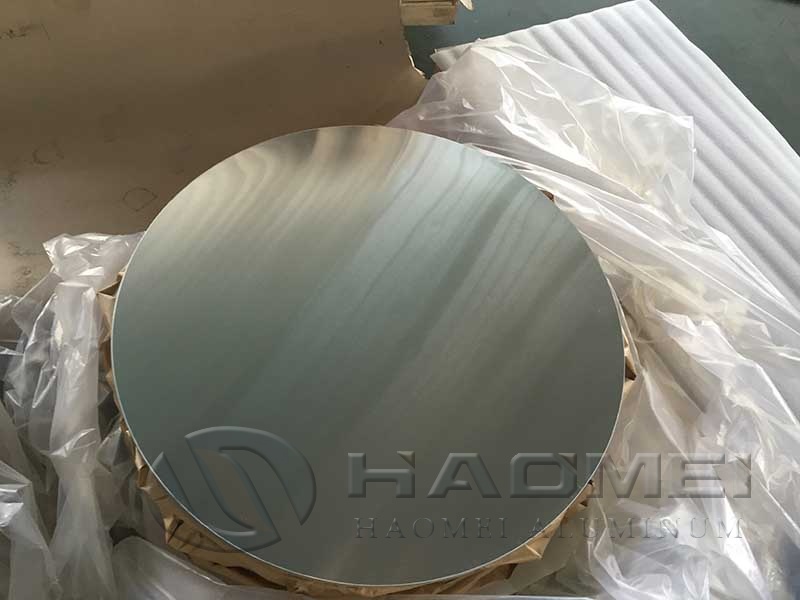
To keep terminology aligned with suppliers, reference Aluminum Circle as the product form in your RFQ and include your drawing severity (draw ratio or number of redraws).
Specifications that prevent earing and cracks (RFQ checklist)
Use this checklist to make the offer comparable and to prevent "meets alloy only" supply.
A. Forming performance requirements
Grain size target and uniformity: specify a measurable method (e.g., metallographic grain size per ASTM E112, or supplier internal method with reporting). Fine, uniform grains reduce orange peel and stabilize draw.
Texture control / earing index: ask supplier to report earing performance based on cup test results (your tooling conditions should be disclosed). If you do not have a defined in-house method, request baseline data from the mill and run first article trials.
Temper: O temper for deep drawing unless proven otherwise.
B. Surface and cleanliness
Surface: free from oil stains, roll marks, scratches, embedded particles, and pitting in the usable area.
Lubricant: define whether you accept mill-applied forming lube or require dry. Residual oils can affect anodizing and non-stick coating adhesion.
Edge quality: burr control is critical to avoid die scoring.
C. Dimensional controls
Diameter tolerance and roundness: specify tight roundness if you use high-speed feeders.
Thickness tolerance: align with your ironing or spinning allowance.
Flatness: important for blank holder stability; define a measurable criterion.
Incoming inspection and tests: practical, verifiable methods
These checks are commonly used by cookware plants because they correlate to drawability and coating yield.
| Test / check | Standard reference (typical) | What it detects | Acceptance tip |
|---|---|---|---|
| Chemistry (OES/ICP) | ASTM / EN lab methods | Wrong alloy, contamination | Verify Mg, Fe, Si for consistency batch-to-batch |
| Tensile properties | ASTM E8 / ISO 6892-1 | Temper mismatch, overwork | Use to confirm O vs H temper and consistency |
| Hardness | ASTM E18 (Rockwell) / ISO 6508 | Quick temper screen | Create internal correlation to tensile |
| Metallography grain size | ASTM E112 | Orange peel risk, instability | Require photos and grain size reporting |
| Cup draw / earing test | Internal method (reporting required) | Earing trend, cracking tendency | Compare to your historical "good" lot |
| Surface roughness | ISO 4287/4288 | Coating adhesion, appearance | Agree Ra range for anodized vs coated products |
If your plant coats (PTFE, ceramic) or anodizes, add adhesion and appearance trials on first article lots. A low scrap draw lot can still fail coating if surface contamination or roughness is uncontrolled.
Comparison table: what to ask when multiple suppliers quote "cookware grade"
| Quotation item | Supplier A states | Supplier B states | What you should require |
|---|---|---|---|
| Alloy, temper | "1060 O" | "1050A" | Exact alloy standard (EN/ASTM), temper, and melt traceability |
| Drawing performance | "Good for deep drawing" | "Cookware use" | Earing index or cup test report, plus grain size evidence |
| Surface quality | "No defects" | "As per standard" | Defined defect list + inspection method + acceptance level |
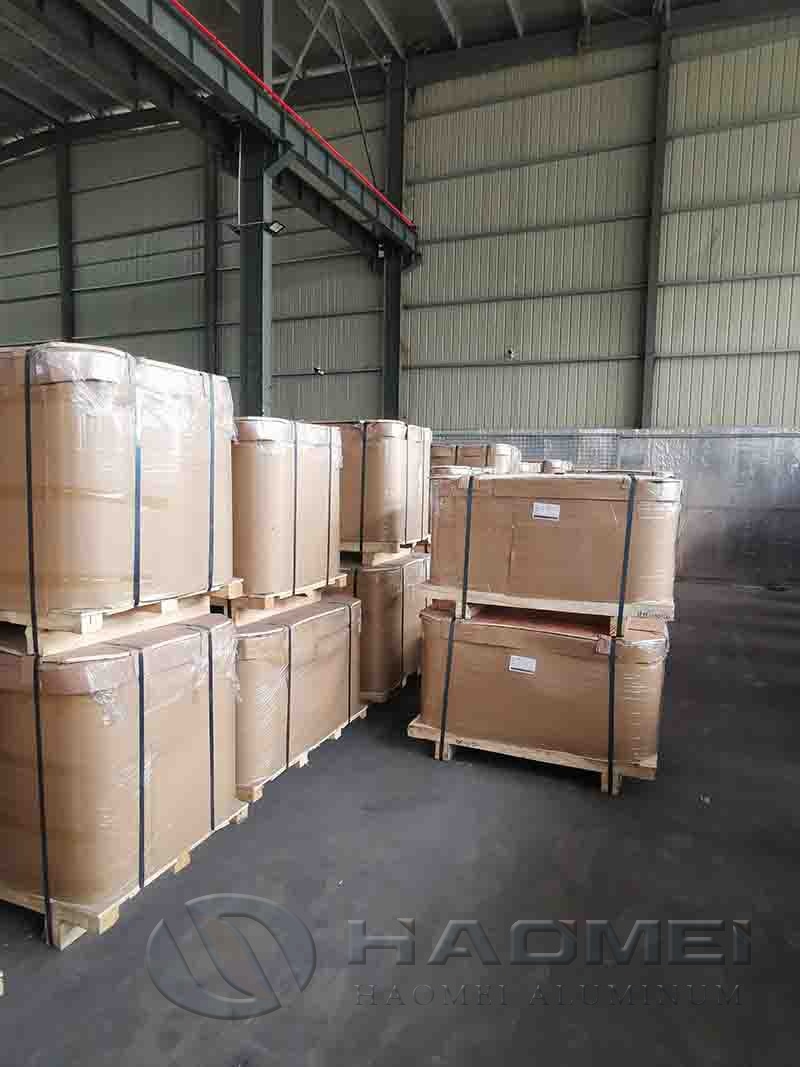
| Packaging | "Standard export" | "Wooden pallet" | Interleaving, moisture barrier, edge protection, ID labels |
| Claims | "Food grade" | "FDA compliant" | Material declaration referencing EU 1935/2004 or relevant market requirements; avoid vague claims |
For product naming consistency in your internal BOM and supplier documents, using Aluminum Circles can reduce confusion across plants that use different terminology (disc, blank, circle).
Process tips that reduce forming scrap (use with the supplier's data)
Match blank holder force and lubrication to the delivered surface condition. Changing from dry to oiled circles without re-tuning can increase galling and tears.
Control storage humidity. Moisture plus residual rolling oil can stain surfaces and cause coating defects.
Run a first-article trial that records: draw force trend, earing profile, trim allowance, and crack locations. Share data with the supplier to stabilize texture and anneal targets.
Original source: https://www.hm-alu.com/a/aluminium-circle-for-cookware.html
Tags:cookware aluminum disc deep drawing circle
Prev: Food Container Aluminum Foil
Next: Which One to Choose: 1050 or 3003 Aluminum Circle for Cookware